

Some treatments refresh the surface. Others go deeper and resurface damaged tissue more aggressively. If you are weighing laser resurfacing against microneedling, the details matter.
Let’s get into what’s the difference, where each treatment shines, and how to think through the right next step for your skin.
Understanding Microneedling Vs Laser: Matching Treatments to Your Skin Concerns
Aesthetic treatments work best when the technology matches the problem. That sounds obvious, but this is where many patients get stuck. They hear that both treatments improve skin texture, scars, and wrinkle concerns, so they assume the results are basically the same.
They are not.
Microneedling and laser both stimulate repair, but they do it in very different ways. One relies on a needle device. The other uses light energy. Because of that, the depth, downtime, risks, and final outcome can look very different.
Think about it this way.
If your goal is subtle skin rejuvenation with less downtime, microneedling may be a better fit. If you want to resurface deeper damage, soften a stubborn acne scar, or target sun damage and deeper wrinkles, laser may be the better option for your skin.
That is why choosing between microneedling and laser should start with your skin concerns, your skin condition, and your real-life tolerance for recovery. At Boujee Nurse, this is exactly why a consultation matters. It gives us time to evaluate your skin and build a treatment plan tailored to your skin goals.
The Mechanics of Microneedling Treatments
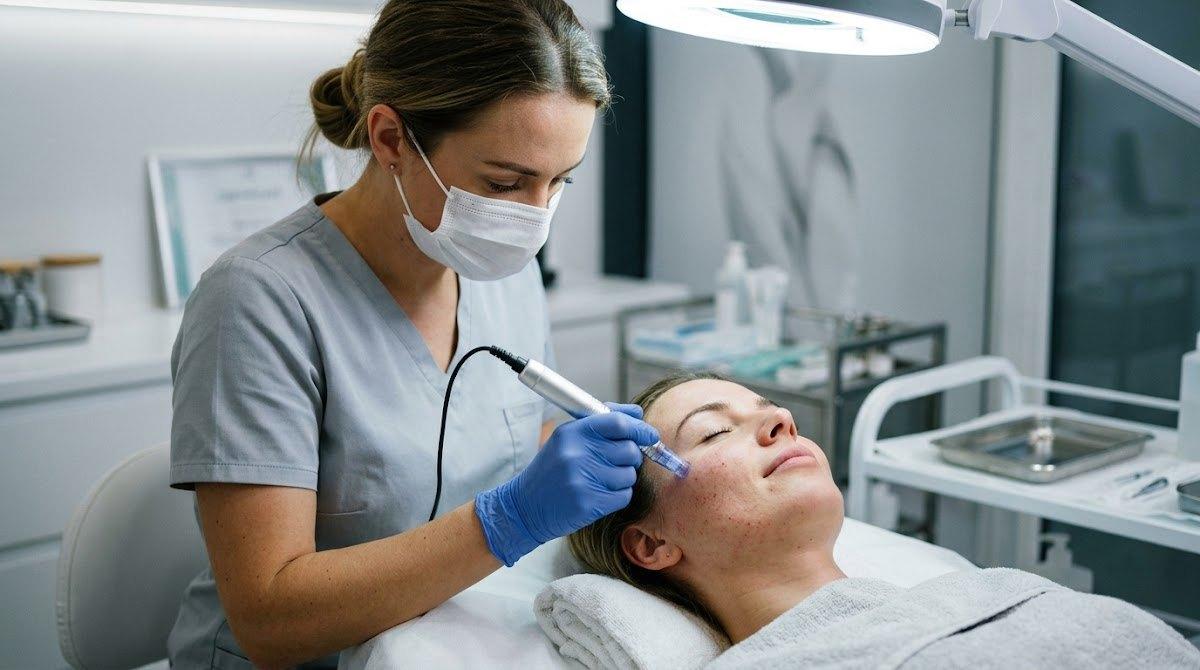
Microneedling is a minimally invasive type of treatment that uses fine needles to create tiny, controlled injuries in the skin. In simple terms, microneedling is a great collagen-building treatment that uses mechanical injury instead of heat.
The device involves the use of thin, sterile tips, often around 1.5 mm, with systems designed with hundreds of points. These needles to create microchannels can generate about 300 superficial punctures per square centimeter when passed evenly over the face.
Here’s why that matters.
Those tiny channels stimulate the healing process and encourage new collagen and elastin production. Because microneedling does not remove the top layer of skin with heat, it tends to have less downtime and lower pigmentation risk across many skin types.
Microneedling is often chosen for:
- fine lines
- mild acne scar concerns
- uneven skin
- early wrinkle changes
- mild sagging skin
- routine skin rejuvenation
It also boosts product absorption after treatment, which can support skincare penetration. If you want to learn more about microneedling , this is often a strong option for your skin when the goal is gradual improvement in skin tone and texture.
How Laser Treatment Works to Resurface Skin
Laser is a treatment that uses concentrated beams of light to heat or ablate targeted tissue. Laser treatment works by delivering focused energy into the layers of skin to trigger controlled remodeling.
With fractional laser systems, the laser creates microscopic columns of treated tissue while leaving surrounding skin intact. That untouched skin helps speed the healing process compared with older full-field ablative lasers.
This is where laser technology stands out.
Ablative lasers remove the top layer of skin and resurface damaged skin more aggressively. A non-ablative laser heats deeper tissue without fully removing surface skin. Both can stimulate collagen, but the intensity and downtime differ.
Laser for skin concerns is often the better match for:
- deeper wrinkles
- severe sun damage
- advanced texture changes
- uneven skin tone
- stubborn acne scar patterns
For many patients, a laser treatment can resurface scarred tissue and reveal smoother, tighter skin over time.
Clinical Efficacy of Microneedling Vs Laser Resurfacing
This is where the gap becomes clear.
A split-face clinical study showed that laser outperformed microneedling for deeper tissue remodeling, especially for scar revision. Results were stronger when the acne scar was newer, with scars under 10 years old responding significantly better for both treatments.
So yes, microneedling vs laser is not just a style preference. The numbers show meaningful differences.
Targeted Acne Scar Reduction Results
If you compare microneedling for acne scar correction with laser for acne scars, laser had better improvement across nearly every scar category in the study.
Mean percentage improvement by scar type:
- Rolling scars: 42.90% with laser vs 16.18% with microneedling
- Boxcar scars: 36.18% with laser vs 3.74% with microneedling
- Ice-pick scars: 3.13% with laser vs 0.42% with microneedling
That matters if you are looking for the best treatment for acne scars, especially textural scars that sit deeper in the dermis. Microneedling treatments can improve the appearance of acne scars, but laser tends to resurface deeper defects more effectively.
The Exceptional Benefits of Laser for Deep Remodeling
The benefits of laser are most obvious in severe scarring, advanced sun damage, and deeper wrinkle concerns. In the same study results , laser produced quicker and more dramatic results.
Overall clinical improvement stats included:
- Goodman and Baron grade improved by 32.9% with laser and 9.3% with microneedling
- Patient subjective score improved by 49.4% with laser and 19.7% with microneedling
Even more telling, 73.3% of laser-treated areas reached mild GB Grade 2 at follow-up, compared with only 20% on the microneedled side.
That does not mean microneedling is ineffective. It means microneedling requires a series of treatments and usually delivers subtler change. Laser resurfacing is often the stronger choice when patients who want dramatic results are dealing with more damaged skin.
Managing Expectations: Downtime and Safety Profiles
Results matter, but so does real life.
You may want stronger correction, but not if the downtime does not work with your schedule. This is where microneedling vs laser treatments becomes a practical decision, not just a cosmetic one.
Both treatments can cause redness and swelling early on. Still, the amount of downtime is not close.
Evaluating Expected Downtime for Optimal Planning
Laser downtime averages about 7.60 days in the study. During that stretch, you may see redness, swelling, crusting, peeling, and dotted pigmentation. Full peeling may last 1 to 2 weeks depending on the laser treatment and settings used.
Microneedling downtime averaged 3.73 days, though visible redness often calms in 1 to 2 days. That shorter downtime is one reason microneedling is often popular for people who want less disruption.
There is more.
Laser may also require pre-treatment priming for around 15 days with pigment-lightening products and strict sun protection after treatment. That preparation is especially important when pigmentation risk is a concern.
Pigmentation Risks Across Different Skin Types
Postinflammatory hyperpigmentation, often called PIH, is a darkening of the skin after inflammation. PIH is a common concern when heat-based treatments resurface the skin, especially in darker skin types.
According to the study , laser had a 30% overall PIH risk. That risk increased by Fitzpatrick type, including 21.43% for Type III, 30% for Type IV, and 50% for Type V.
Microneedling had a much lower PIH rate of 6.67% overall.
That is a big reason many providers prefer microneedling or laser treatments carefully depending on pigment risk. Non-ablative laser treatments may lower some risk compared with more aggressive ablative options, but the choice still depends on your skin, your history of pigmentation, and your skin needs.
Both treatments are also avoided during pregnancy, lactation, active acne breakouts, skin infections, or severe eczema.
At-a-Glance Pros and Cons of Microneedling and Laser Therapy
Before you choose between microneedling, it helps to see the tradeoffs in one place. Laser vs microneedling is really a question of intensity, recovery, and the level of correction you want.
| Aspect | Laser Resurfacing Pros | Laser Resurfacing Cons | Microneedling Pros | Microneedling Cons |
|---|---|---|---|---|
| Efficacy | Superior results for deep scars, sun damage, and wrinkle correction. Often long-lasting. | Less ideal for very mild maintenance needs. | Gradual, natural-looking improvement for fine lines and mild texture issues. | Slower change and weaker results for severe scarring. |
| Downtime & Safety | Precise depth control and powerful skin resurfacing. | Longer downtime, more redness, higher pigmentation risk, possible hypopigmentation. | Shorter downtime, safe across more skin types, low PIH risk. | Temporary discomfort and infection risk with poor aftercare or active acne. |
| Other Factors | Deep remodeling, and some fractional laser treatments work well after a single session. | Higher cost and more prep. | Versatile, minimally invasive, helps skincare absorb better. | Surface-focused and less effective for deep scars. |
If you are considering microneedling or laser, ask yourself three things:
- Do I want subtle improvement or stronger correction?
- How much downtime can I realistically handle?
- Am I treating fine lines and wrinkles, or a specific skin issue like an acne scar or severe sun damage?
Those answers usually point you in the right direction.
Combining Microneedling and Laser Treatments for Enhanced Rejuvenation
Sometimes the best answer is not microneedling or laser. It is microneedling and laser, used in the right order over time.
Combining microneedling and laser can make sense when you have different skin concerns at different depths. One treatment builds a base. The other goes after stubborn damage.
The Synergistic Strategy of Microneedling and Laser Therapy
Microneedling and laser therapy should not be done on the same day, but they can work well in a longer plan. Microneedling and laser treatments can complement each other when spaced out properly.
For example, microneedling and laser resurfacing may be used strategically like this:
- microneedling first to stimulate skin regeneration and support overall skin quality
- laser later to resurface deeper scars, fine lines, sun damage, or uneven skin tone
This approach can improve skin over time while balancing recovery. It also allows your provider to adjust based on how your skin responds.
That is the real value of compare microneedling and laser carefully. You do not always have to pick one forever. Sometimes microneedling and laser therapy together offer the best treatment pathway for long-term skin health and youthful-looking skin.
Conclusion
Laser and microneedling both improve skin, but they do different jobs. Laser can resurface deeper damage and deliver faster change. Microneedling offers a gentler path with less downtime and lower pigment risk. The right treatment depends on your goals, your skin, and your schedule. If you need help deciding, book a consultation .
Frequently Asked Questions About Laser Resurfacing Vs Microneedling
Is laser skin resurfacing better than microneedling?
For deep scars, sun damage, and a deeper wrinkle, laser is usually better. For lighter correction and less downtime, microneedling may be enough.
Should I do microneedling or laser first?
It depends on your skin. In some plans, microneedling comes first, then laser later for deeper correction.
Why do plastic surgeons not like RF microneedling?
Some are cautious about RF because RF technology adds heat, which can create uneven results or fat loss in the wrong candidate.
What is the best age for laser resurfacing?
There is no perfect age. The best timing depends on your skin concerns, sun damage, acne scar history, and signs of aging.