

Some treatments give instant glow. Others ask for patience, then reward you with firmer skin and smoother texture.
Here’s the simple version: Hydrafacial vs microneedling is really a question of surface refresh versus deeper skin rejuvenation.
Understanding Hydrafacial: A Comprehensive Skin Treatment
Understanding HydraFacial starts with one key point. HydraFacial is a non-invasive skin treatment that cleanses, exfoliates, extracts, and infuses the skin in one session.
It uses a patented wand instead of needles or abrasive crystals. That matters because HydraFacial uses fluid, suction, and targeted serums to remove dead skin cells, clear a clogged pore, and hydrate the skin without breaking the surface.
Think of it this way.
Where harsh exfoliation can leave skin irritated, HydraFacial treatments work more gently. The spiral tip and Vortex-Fusion technology help loosen debris, open pores, and deliver ingredients where they can do more good. Because of this, it is suitable for all skin types, including sensitive skin and a wide variety of skin concerns.
The 3-Step Process for Instant Skin Health
Most HydraFacial sessions take 30 to 90 minutes. Timing depends on add-ons and your treatment plan.
The classic process is simple:
Step 1: Cleanse & ExfoliateThe provider removes surface buildup and excess oil. Gentle acids help loosen dirt and remove dead skin cells without the rough feel of old-school scrubs.
Step 2: ExtractA painless vacuum clears blackheads, whiteheads, and buildup from each pore. This step is a favorite for oily skin and congested areas.
Step 3: Hydrate & TreatCustomized serums with peptides, antioxidants, and hyaluronic acid are infused into the skin to hydrate, calm, and support skin health.
This treatment that combines exfoliation, extraction, and hydration can be used on the face, neck, chest, lips, eyes, and hands.
Top Hydrafacial Benefits for Immediate Glow
Here’s why many people choose HydraFacial before an event or photo-heavy weekend.
HydraFacial provides immediate improvement in glow, softness, and smoothness. HydraFacial provides a quick reset for dull skin, dry skin, uneven skin tone, and a rough overall skin texture. For many people, the appeal is simple: no needles, no recovery, no guessing.
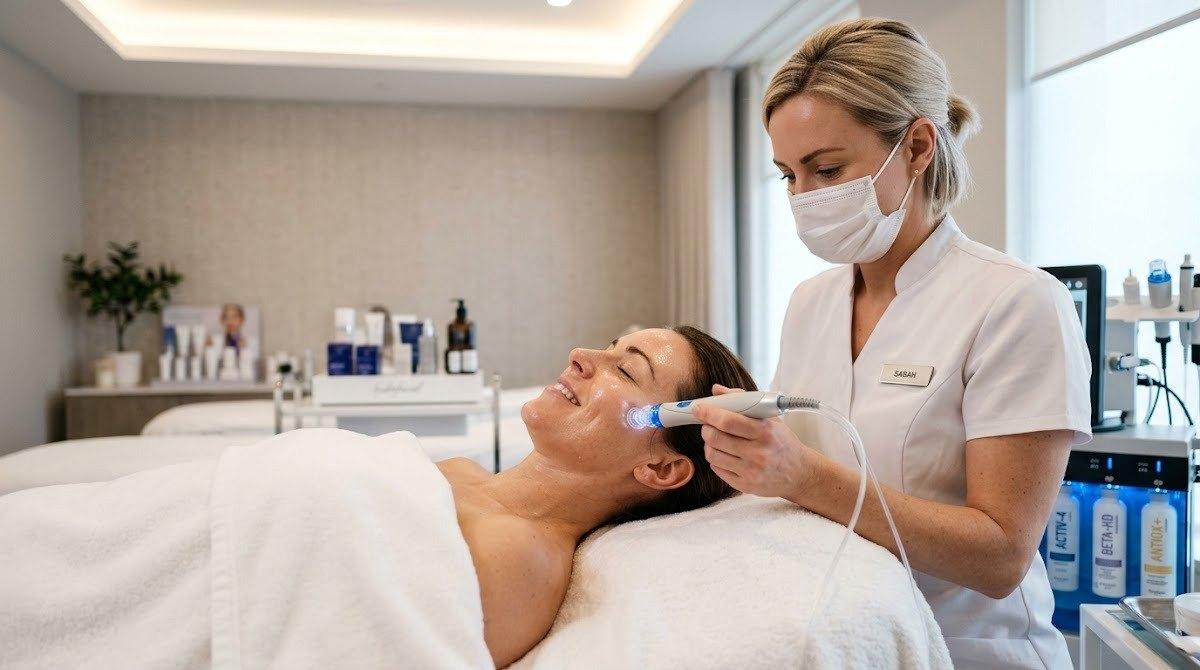
Some standout HydraFacial benefits include:
Immediate glowing skin
Little to no redness after the first hour
No real downtime
Better product absorption in your daily skincare
A non-invasive skin option for different skin concerns
Used on all skin types, including acne-prone and rosacea-prone skin
HydraFacial offers a polished, fresh look right away. If your goal is improving skin before a wedding, trip, or work event, that speed is hard to beat.
Why You Might Choose Hydrafacial Before an Event
Now for the trade-offs.
HydraFacial focuses on surface-level improvement. It can brighten, smooth, and hydrate, but it does not do much to stimulate collagen or repair deeper skin structure. So if you want major change in acne scars, enlarged pores, or a deeper wrinkle, it may not go far enough.
Results are also shorter-lived. Most people love the glow for 1 to 2 weeks, then keep it going with monthly HydraFacial sessions.
The Power of Microneedling for Deep Skin Rejuvenation
Microneedling is a minimally invasive procedure that uses fine needles to create tiny punctures in the skin. These controlled micro-injuries in the skin trigger the body’s natural healing response.
That response matters. It helps stimulate collagen and supports collagen and elastin production over time. If HydraFacial works on the surface, microneedling works in deeper skin layers where firmness and structure live.
This is why microneedling is often recommended for long-term skin rejuvenation. It can improve skin texture and reduce signs of aging while helping improve overall skin texture across a range of skin concerns.
Microneedling is typically done with FDA-cleared pen devices. In some cases, RF microneedling is used for more advanced targeting.
Microneedling vs Surface Therapies: Weighing the Pros and Cons
When comparing microneedling to facials and exfoliating treatments, the biggest difference is depth.
The benefits of microneedling include:
Better support for collagen and elastin
Smoother skin texture
Improvement in acne scars and uneven texture
Reduction in fine lines and wrinkles
Firmer skin over time
Longer-lasting change for aging skin
Microneedling is highly effective for textural issues that do not respond well to surface treatments alone. A 2009 study in the Journal of Cutaneous and Aesthetic Surgery found marked scar improvement in nearly all subjects, with no permanent adverse effects reported.
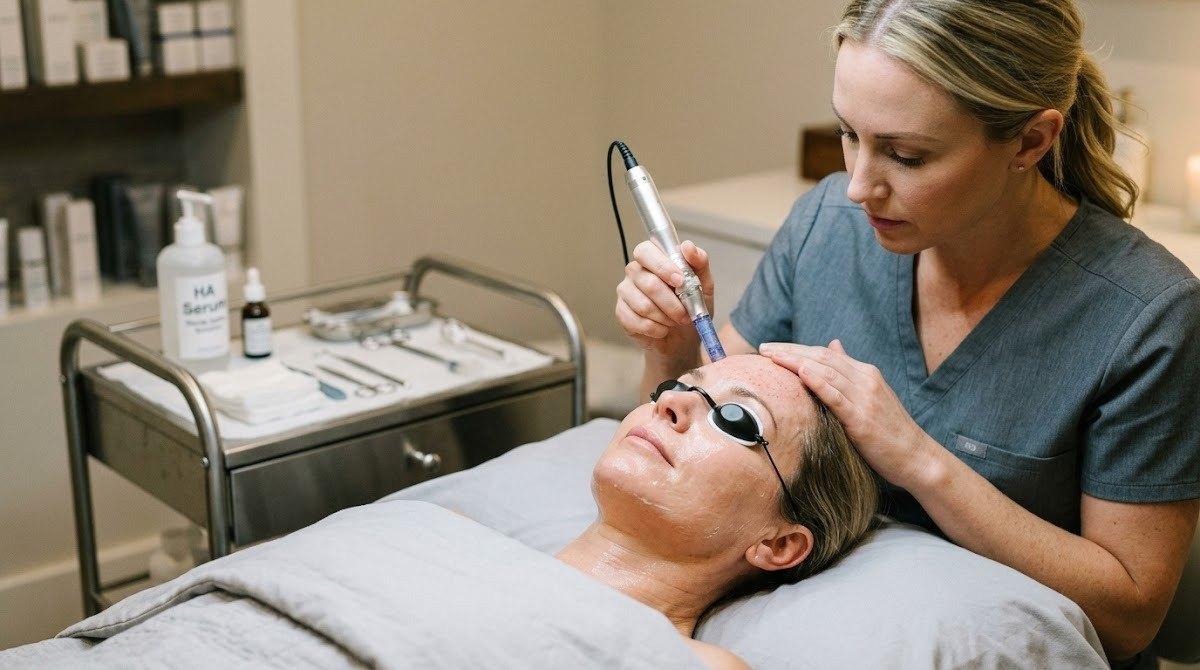
But there are downsides.
A microneedling procedure involves mild discomfort, though numbing cream helps. You should also expect downtime. Microneedling is generally followed by 1 to 3 days of redness, mild swelling, and sometimes peeling. There is also some infection risk if performed poorly, which is why technique matters.
Hydrafacial vs Traditional Exfoliation Methods
Let’s compare HydraFacial to more basic exfoliation.
Traditional exfoliation often relies on grit, friction, or stronger mechanical force. HydraFacial uses gentle acids and fluid dynamics instead. That makes it more comfortable for many people with sensitive skin or an easily upset skin condition.
It also does more than scrub. HydraFacial uses suction to lift debris and then infuses serums, which can improve overall skin and help your home skincare products work better afterward. If your concern is clogged pores, mild breakouts, or dullness, that difference can be noticeable.
Finding the Right Treatment for Your Unique Goals
This is where many people get stuck.
HydraFacial or microneedling depends on your skin, your timeline, and the specific skin concerns like acne scars, dehydration, or fine lines. Both can be excellent. The right treatment depends on your skin type, current skin condition, and how much downtime you can handle.
Choosing the right treatment starts with an honest look at your goals. Do you want fast glow with no interruption to your week? Or are you willing to trade a few days of downtime for deeper change?
Targeting Specific Skin Concerns with Each Method
Choose HydraFacial if your main concerns are:
dry skin
dull skin
uneven skin tone
congestion and visible pore buildup
mild discoloration
a quick facial treatment before an event
Choose microneedling if your focus is:
acne scars
enlarged pores
fine lines
wrinkle softening
loss of firmness
deeper skin repair
improve skin texture in a more lasting way
There is one major caution. Microneedling may not be right for your skin if you have active acne, especially inflammatory or cystic breakouts. In that setting, the treatment can irritate an already stressed skin barrier.
What to Expect During Your Skin Treatment Session
Here’s a side-by-side look at HydraFacial and microneedling and HydraFacial expectations:
| Aspect | Hydrafacial | Microneedling |
|---|---|---|
| Invasiveness | Non-invasive, no needles | Minimally invasive, uses fine needles |
| Pain Level | Painless, relaxing | Mild discomfort, numbing cream applied |
| Treatment Time | 30 to 90 minutes | 45 to 60 minutes |
| Downtime | None, slight redness for about 1 hour | 1 to 3 days of downtime |
| Average Cost | $150 to $300 per session | $200 to $700 per session |
| Results Timeline | Instant, peaks over 1 to 2 weeks | Gradual, develops over 4 to 6 weeks |
Costs can rise if you add PRP to a microneedling treatment. That add-on is often used to support healing and skin rejuvenation.
Long-Term Skin Health: Maintenance and Frequency
Here’s the part many people overlook.
Great skin rarely comes from one appointment. Long-term skin health usually comes from a plan that matches your skin goals and keeps pace with changing skin concerns.
For surface glow, many book HydraFacial sessions monthly. That helps maintain smoothness, hydration, and a cleaner pore appearance.
For structural repair, microneedling sessions are usually spaced 4 to 6 weeks apart in a series of 3 to 6. After that, maintenance may happen every 3 to 6 months, depending on individual skin response.
How to Choose the Right Maintenance Plan
If your goal is quick brightness and polish, choose HydraFacial. If your goal is deeper repair and more youthful skin, choose microneedling.
A customized treatment plan can also blend both over time. Many people use microneedling for scar revision and fine lines, then rotate in HydraFacial treatments to hydrate, clear buildup, and support overall skin health.
Integrating Treatments into Your Skincare Routine
This is where HydraFacial and microneedling can work together.
Microneedling vs HydraFacial is not always an either-or decision. Microneedling and HydraFacial can complement each other when spaced properly. One targets deeper skin remodeling. The other refreshes the surface and supports skin health between collagen-focused visits.

There is one rule to remember. HydraFacial and microneedling should not be done on the same day. Your provider should space them out by several weeks to protect the barrier and address specific skin concerns safely.
If you are compare HydraFacial options or comparing microneedling for a variety of skin concerns, a consultation helps you choose the right fit for your skin, not someone else’s.
Conclusion
HydraFacial vs microneedling comes down to surface glow versus deeper repair. HydraFacial is best for instant brightness, hydration, and no downtime. Microneedling is better for acne scars, fine lines, and long-term texture change. If you want treatment for your skin that feels tailored, the smartest next step is a personalized consultation.
Frequently Asked Questions About Hydrafacial Vs Microneedling
Is a HydraFacial better than microneedling?
It depends on your skin goals. HydraFacial is better for quick glow. Microneedling is better for deeper repair.
Is 40 too old for microneedling?
No. Microneedling is often a strong option for aging skin, firmness loss, and fine lines.
What does your face look like 2 days after microneedling?
Usually pink or lightly red, with some dryness or tightness. Downtime is often mild by day two.
What are the negatives of HydraFacial?
Results are short-term, and it does not do much for deep acne scars or deeper wrinkle concerns.
What does your face look like 2 days after microneedling?
Most people still see mild redness and a slightly rough feel, but overall skin usually looks calmer than day one.