

You hear a lot about PRP for hair loss, but the claims are all over the place. Some call it a breakthrough. Others call it overhyped.
Here’s the useful middle ground. We’ll look at the science, the treatment process, timelines, risks, and where PRP fits among modern hair loss treatments.
Understanding PRP Therapy and Hair Growth Fundamentals
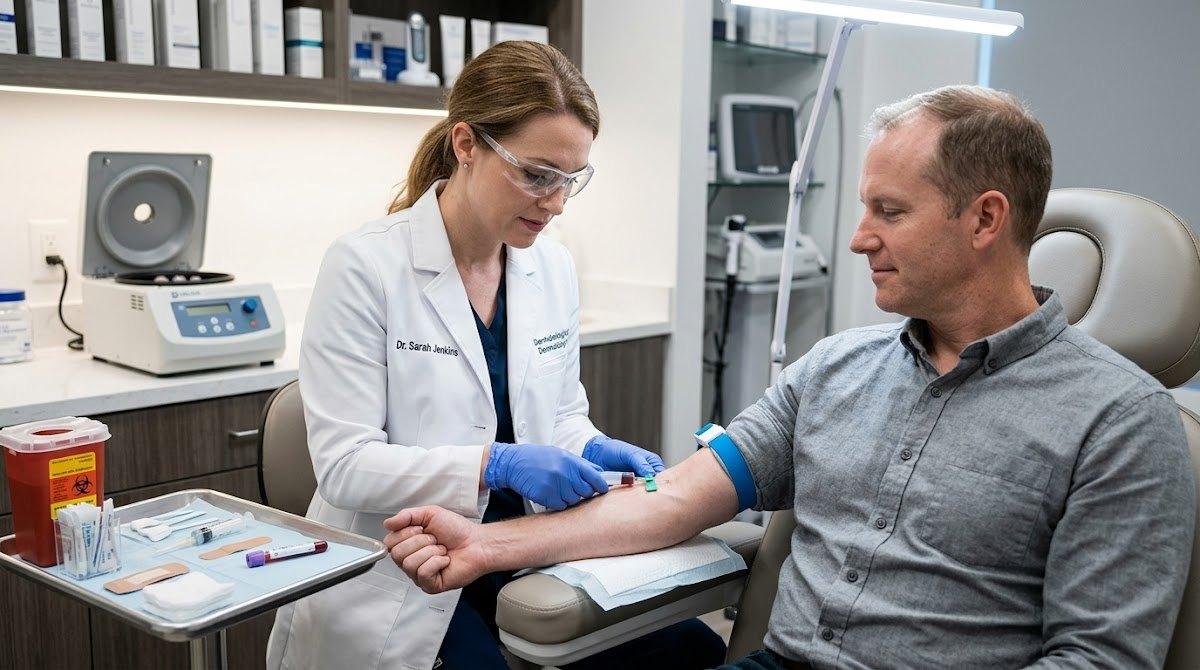
PRP is a regenerative treatment made from your own blood. More specifically, platelet-rich plasma is a blood product with a much higher platelet concentration than normal blood.
That matters because platelets do more than help with clotting. They also release growth factors tied to repair and regeneration.
Think about it this way.
When tissue needs help, platelets act like messengers. They send signals that support healing, blood vessel formation, and cell activity. In PRP therapy, a provider takes a small amount of your blood, processes it, and separates out the part rich in those helpful signals.
A typical goal is a 2 to 6 times higher platelet concentration than baseline blood. Normal platelet levels often fall between 150 and 450 per mcl, so the aim is to concentrate the platelets enough to make treatment meaningful without overcomplicating the process.
PRP uses your own blood, which is one reason many people find it appealing. Because it is autologous, meaning it comes from you, the risk of allergic rejection is extremely low.
One important point, though.
PRP preparation systems are FDA-cleared for some orthopedic uses. When it comes to hair restoration, PRP is considered off-label. That is legal and common in medicine, but it should always be discussed clearly during consultation.
If you want a closer look at how this treatment is offered in practice, our PRP hair restoration page explains the basics.
How Does PRP Work for Hair Loss? The Science Revealed
PRP works by delivering a concentrated mix of signaling proteins into the scalp where hair follicles live and cycle. Those proteins include PDGF, TGF-β, VEGF, and EGF, among others.
In plain English, growth factors in PRP promote healing signals around the follicle.
That can help stimulate dermal papilla cells, improve blood flow, and support a better environment for hair to keep growing. Some research suggests PRP may prolong the anagen phase, which is the active growth phase of the hair cycle. It may also reduce early follicle cell death, which can slow hair shedding.
This is the key idea.
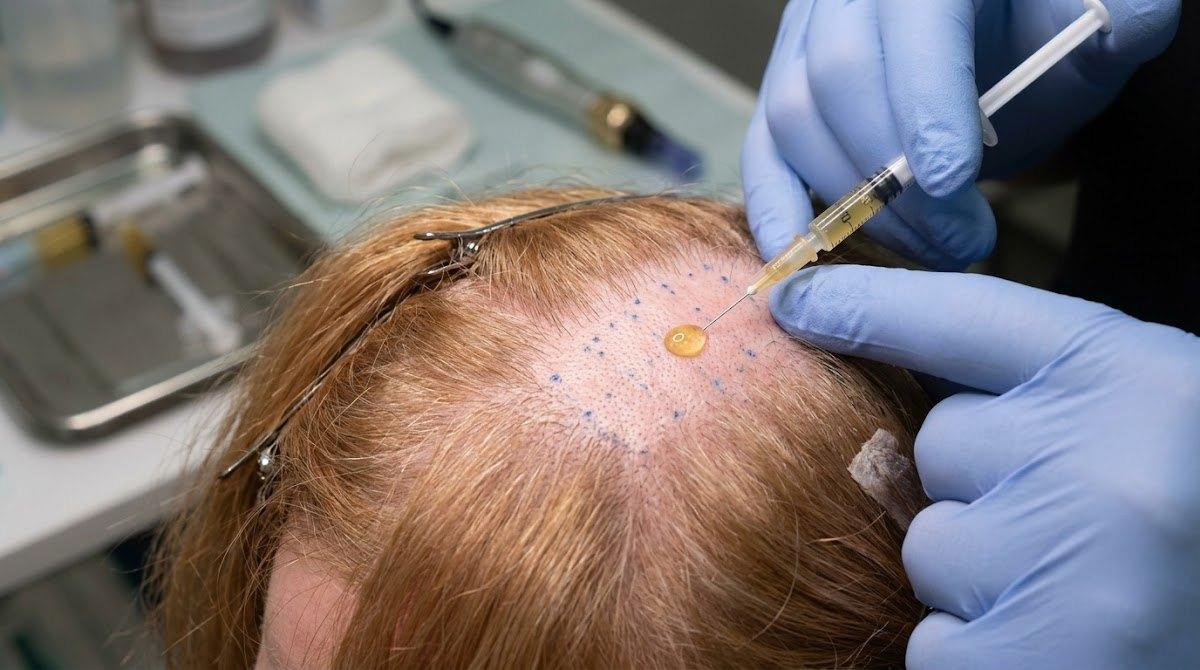
PRP does not create brand-new follicles. Instead, it aims to wake up weak or dormant hair follicles that are still alive but underperforming. That is why PRP works best for thinning, not shiny areas of complete baldness.
When providers inject PRP into targeted areas of the scalp, the goal is to stimulate hair follicles and encourage thicker shafts over time. That’s also why people often ask whether PRP regrow hair permanently. The honest answer is no. It can support regrowth and healthier hair growth, but it does not permanently switch off genetic or hormonal drivers.
Evaluating Which Types of Hair Loss Respond to Treatment
Not all types of hair loss respond the same way. That’s where many articles get too vague.
The strongest evidence is for androgenetic alopecia, also called male or female pattern baldness. In these cases, PRP often helps improve hair thickness and density, especially in patients with early-stage hair thinning.
Here’s a clearer breakdown:
| Hair Loss Type | Key Clinical Findings | Research Scope |
|---|---|---|
| Androgenetic Alopecia (AGA) | Increased density, thicker strands, longer anagen phase. PRP with minoxidil often performs better than either alone. | Multiple meta-analyses and RCTs |
| Female Pattern Hair Loss (FPHL) | Better hair thickness and visible improvement in thin areas. | Meta-analyses up to 776 patients |
| Alopecia Areata (AA) | Mixed results versus steroids, but useful in resistant cases or as part of combination care. | Various RCTs |
| Cicatricial (Scarring) | Some success reported in case studies such as FFA, LPP, and CCCA. | Case reports |
| Post-Hair Transplant | May improve graft survival by about 15% and speed early growth. | RCTs and experimental studies |
Ideal candidates are usually patients with early thinning hair rather than advanced baldness. Younger patients and those with naturally strong platelet counts may also respond better.
Still, PRP work for hair loss is not one-size-fits-all. If hair loss occurs because of scarring, autoimmune disease, or certain medical conditions, the response may be less predictable.
Clinical Evidence: Does PRP Hair Restoration Actually Work?
Let’s get to the question behind the question.
Does PRP actually help enough to justify the time and cost?
Broadly, yes, for the right person. About 84% of studies report positive findings, and around 30% to 50% of patients see highly visible benefits. In pooled reviews, hair count gains ranged from 17.90 to 38.75 hairs/cm² according to this meta-analysis .
That does not mean every session produces dramatic before-and-after changes. But the overall effectiveness of PRP is stronger than many people expect, especially for androgenetic alopecia.
The other big takeaway is synergy.
Clinical research supports PRP with other hair restoration methods like topical minoxidil or oral finasteride. In many studies, combination care outperforms PRP alone. A useful journal review supports that pattern.
So if you are wondering whether PRP works, the better question is this: PRP works for whom, and in what setting?
Usually, the best answer is patients with androgenetic alopecia, early thinning, and a realistic treatment plan.
The PRP Hair Treatment Process: What to Expect
The process is more straightforward than many people think.
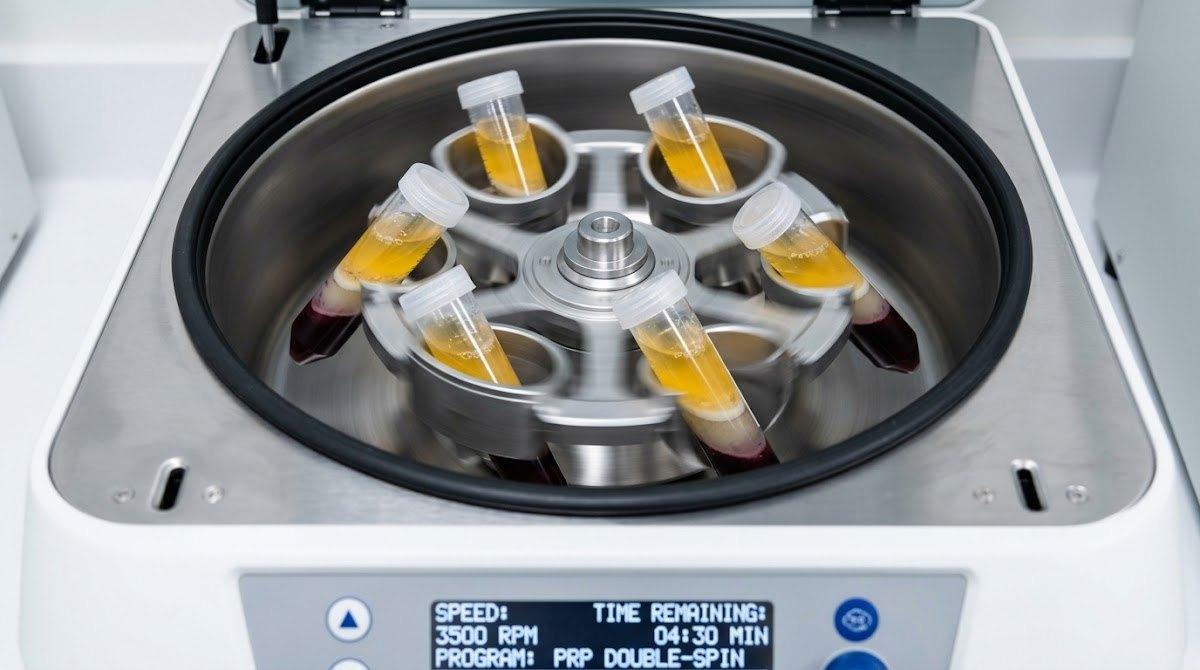
First, blood is drawn, usually drawn from your arm. Most sessions involve drawing a small amount, often 10 to 60 ml. Then that blood goes into a centrifuge, which is a machine that spins fast enough to separate red blood cells, white blood cells, plasma, and platelet-rich layers.
Many providers prefer a double spin because it can centrifuge to concentrate the platelets more effectively.
Next comes the treatment itself.
The scalp is usually numbed first. Then the provider inject PRP in tiny amounts across thinning zones. A common pattern is micro-doses of about 0.05 ml per site across many points, sometimes up to 120. In other words, PRP injections are precise, not random.
This microneedling page also explains a related approach to scalp stimulation, since some people ask about pairing the two.
Cost varies widely. A single PRP hair treatment can range from $400 to $2,500, and insurance usually does not cover it.
Does PRP Regrow Hair Permanently? Timelines for Hair Regrowth
This is where expectations matter most.
PRP hair restoration can improve hair density, reduce shedding, and support thicker hair. But it is not permanent. If the underlying pattern continues, results over time fade without upkeep.
Most protocols start with three sessions, each about a month apart, followed by maintenance sessions every 3 to 12 months.
Visible change often starts between 1 and 6 months. Many people see noticeable improvements around 3 to 6 months, with the best cosmetic effect often landing in that same window.
Without booster sessions, studies show gains can decline after six months. This study found benefit tapering after peak response, and another study showed partial loss of results by month 12.
That’s why PRP therapy for hair should be viewed as maintenance-based care, not a once-and-done fix.
Interested in how PRP is used in other regenerative treatments? Our PRP facial page covers another application of the same technology.
Dermatology Perspectives: Safety, Risks, and Contraindications
From a dermatology perspective, PRP has a strong safety profile.
Because the treatment comes from your body, there is no risk of disease transmission from a donor product. That said, safe treatment still depends on sterile technique, good patient selection, and proper timing.
Most side effects are mild and short-lived:
- Tenderness at injection sites
- Mild redness or swelling
- Temporary itching
- Headache
- Brief discoloration
Most people return to normal activity the next day.
There are also times when PRP therapy should be avoided. Absolute contraindications include platelet dysfunction, active local or systemic infection, and sepsis. Relative contraindications include active inflammatory scalp disease, immune suppression, and recent NSAID or steroid use depending on timing.
So, does PRP for hair loss make sense? Often yes, especially if you are experiencing hair loss in the early stages and want a non-surgical option. But the right next step is a careful evaluation, not guesswork.
Conclusion
PRP can help with hair loss, especially in early thinning linked to pattern loss. The best evidence supports better thickness, density, and slower shedding over time. It is not permanent, and maintenance matters. If you want realistic guidance, a thoughtful consultation can help you decide whether PRP belongs in your plan.
Frequently Asked Questions About PRP For Hair Loss
Does PRP actually regrow hair?
It can support hair regrowth in thinning areas by helping weak follicles work better.
When is it too late for PRP?
PRP is often less helpful once an area has progressed to smooth, complete baldness.