

Maybe your filler looked great at first, then something shifted. A lip feels too full. An under-eye looks puffy. A cheek seems off in photos.
The good news is simple: some filler can be reversed. Here’s how the process works, what it feels like, the risks, and when dissolving makes sense.
Understanding How to Dissolve Dermal Filler
A dermal filler is a gel-like injectable used to add volume, contour features, soften a wrinkle, and rejuvenate the face. Some formulas are temporary. Others are not. That detail matters.
Here’s the key point: only filler made of hyaluronic acid can usually dissolve with an enzyme called hyaluronidase. If you are researching filler reversal , that is the first question to answer.
Which Facial Fillers Can Be Dissolved?
Not all filler responds the same way. Hyaluronic acid filler is the common type that can be reversed. This includes fillers like Juvéderm and Restylane, including Juvéderm Ultra®, Juvéderm Ultra Plus®, Restylane® , and similar HA fillers.

These products are made of hyaluronic acid, a substance naturally occurring in the body’s natural tissue. Depending on the type, this type of filler may last 3 to 12 months, or even 8 to 18 months. But if you want to dissolve filler sooner, that timeline can change fast.
Other products are different. Silicone, Radiesse, Sculptra, and Bellafill are not hyaluronic acid-based fillers. They cannot be enzymatically removed. In those cases, filler dissolved is not the usual outcome. You often have to wait for the filler material to fade, or in some cases consider a more invasive option.
How Hyaluronidase Treatment Works
Hyaluronidase is a medical treatment that works by injecting hyaluronidase , a standardized version of an enzyme naturally found in the body. Put simply, hyaluronidase can dissolve HA by cutting hyaluronic acid into tiny pieces.
That sounds technical. It is. But the idea is simple.
The enzyme that breaks down HA allows your body to absorb and clear the product. This treatment can show results immediately in some areas, though final settling still takes time.
One more point matters here. The filler itself can create a rare but serious issue called vascular occlusion if it blocks blood flow. Hyaluronidase, by contrast, is the standard tool used to treat vascular occlusion . So the enzyme poses no such risk in the same way. It is used to help reduce it.
Why People Choose To Dissolve Dermal Filler
People choose to dissolve for medical reasons, aesthetic reasons, and sometimes both. And honestly, preferences change. What felt subtle a year ago may now feel like too much.
A skilled consultation helps sort out whether the issue is filler placement, migration, swelling, or simply a look that no longer fits your face.
Common Reasons for Having Filler Dissolved
According to the ASPS , medical professionals may recommend dissolving for nodules, irregular texture, inflammatory issues, or vascular injuries. Those are clear medical reasons to dissolve filler.
Then there are personal reasons. Maybe you see asymmetry. Maybe one side looks fuller. Maybe the filler was placed well, but the area changed over time.
Migration is another issue, especially with cross-linked HA fillers . This can happen when acid fillers move outside the intended zone. Lip filler may drift. Under-eye filler may puff. A cheek may lose definition instead of helping you achieve the look you wanted.
There’s also what many injectors quietly see every week: overfill. The under-eye is a major example. Clinical guidance suggests only a small group are ideal candidates there. Many patients who want correction in that area do better after dissolving lip filler or tear trough filler and starting fresh later.
The Experience: Dissolving Lip Filler and Facial Enhancements
If you have never had filler dissolve before, you probably want the practical details. Fair enough. The process is quick, but it should never feel rushed.
Preparing for Your Appointment
A consultation comes first. Your provider should review your health history, current medications, prior injectables, and the exact type of filler used. If you are unsure what was injected, old records help.
They should also ask about bee or wasp sting allergies , because those can raise the chance of an allergic reaction to hyaluronidase. The risk is still low, but this step matters.
For about 1 week before treatment, avoid aspirin, fish oil, and similar supplements unless your MD says otherwise. This may help lower bruising and swelling and reduce the chance of a noticeable bruise after each injection.
What Happens During the Procedure
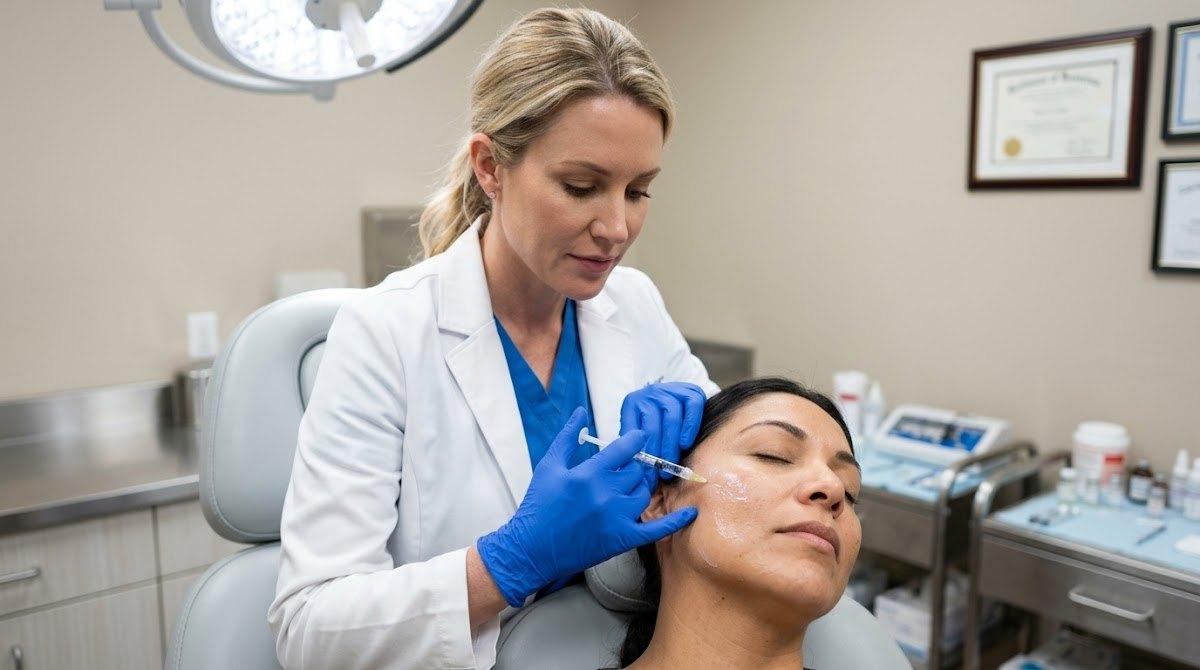
The appointment itself usually takes 10 to 15 minutes. First, numbing cream may be used. Then the area is cleaned, and the provider uses a small needle to inject the substance called hyaluronidase into the treated area.
You may experience a brief sting or burning feeling for about 45 seconds. After that, the area may feel full or tender. Some injectors gently massage the facial tissue so the enzyme called hyaluronidase spreads evenly.

This is where experience matters. Hyaluronidase injections can be adjusted with precision. If you only want to refine a lump, soften a ridge, or correct one small section where filler was placed, a smaller dose may work. You do not always need to dissolve every bit of filler.
Risks, Complications, and Expert MD Recommendations
Let’s be honest. Even a safe and effective treatment has risks. The goal is not to ignore them. The goal is to understand them clearly.
Potential Side Effects to Watch For
Most people notice swelling at the injection site. Some also see redness, tenderness, or mild discoloration. According to ASPS guidance , that is normal and usually fades fast.
A true allergic reaction can happen, but it is uncommon. Published data reports the risk at 0.05% to 0.69% at lower doses. If you have a history of allergic responses, your MD or plastic surgeon may recommend extra caution.
There is one more surprise people should know about. Because hyaluronidase also acts on some of your body’s natural HA, the area can briefly look flatter, thinner, or show fine lines and wrinkles. That can feel alarming, especially if the goal was to restore volume. In most cases, the skin rebounds over several days as natural HA returns.
Finding a Qualified Provider
If you plan to dissolve filler, choose someone who understands anatomy deeply. The American Society of Plastic Surgeons and the American Board of Cosmetic Surgeons are useful places to verify credentials.
That matters because placement is everything. A skilled injector knows where to inject, how much hyaluronidase to use, and how to protect your natural look. If you are also exploring dermal filler options , that same judgment helps you avoid repeating the problem.
Recovery, Timeline, and Proper Aftercare
This part is reassuring. Recovery is usually simple.
Immediate Recovery and Timeline Expectations
The treatment starts working right away. Many people see filler start to dissolve within hours. Tissue then settles over 3 to 10 days, and desired results are easiest to judge at two weeks.
There is usually no downtime. You can return to work and normal routines the same day. Still, recovery varies depending on the area, the amount of filler, and how your skin reacts.
Essential Aftercare Instructions
Basic aftercare is straightforward:

- Ice the area off and on, without long direct contact
- Skip hard exercise for 24 hours
- Wash with mild cleanser
- Avoid strong active skincare for a few days
- Gently massage only if your injector recommends it
If you plan future treatments like fresh HA filler to add volume, contour, or help soften lines and wrinkles, wait at least 14 days. That gives the treated area time to settle so you can better assess a natural look and decide what to refine next.
Fast Facts: Procedure Data and Market Insights
Use this table as a quick guide. It keeps expectations grounded.
A 2022 study found a 70% increase in HA injectables. As use rises, treatments like filler reversal become more standard too.
| Statistic / Data Point | Clinical Details |
|---|---|
| Natural HA Duration | 8 to 18 months, varies depending on formulation |
| Procedure Time | 10 to 15 minutes |
| Full Results Timeline | Immediate onset, final results at 2 weeks |
| Pre-Procedure Requirement | Avoid aspirin and blood thinners for 7 days |
| Estimated Cost Range | $50 to $1,625, national average $450 |
Conclusion
If your filler feels uneven, migrated, or simply no longer suits you, reversal may be an effective option. HA filler can often dissolve with hyaluronidase, while non-HA products cannot. The process is quick, the recovery is light, and the safest next step is a thoughtful evaluation with an experienced injector.
Frequently Asked Questions About Can You Dissolve Filler
Can you ever fully dissolve fillers?
Yes, many HA fillers like Juvéderm and Restylane can fully dissolve, though some cases need more than one treatment.
What are the risks of dissolving fillers?
Main risks include swelling, bruising, tenderness, and a rare allergic reaction.
What breaks down fillers fast?
For HA filler, hyaluronidase breaks it down fast.
Will my face go back to normal after dissolving fillers?
Usually, yes. The area often returns close to baseline once the filler dissolves and swelling settles.
What breaks down fillers fast?
Hyaluronidase is the fastest option for hyaluronic acid fillers.
What is the riskiest place for fillers?
Areas with complex blood supply, especially the nose and under-eye, are often considered the riskiest.