

Some treatments fit neatly into any month. Laser does not. If you have ever wondered why providers talk about “laser season” like it is a real thing, there is a reason.
This guide breaks down the best time of year for laser, why winter are the best times for recovery, and how to plan your treatment for smoother healing and better results.
Why Fall and Winter Are Considered "Laser Season"
Laser season is not marketing fluff. It is a practical window when laser skin tends to heal more predictably because there is less sun exposure, cooler weather, and shorter days.
Here’s why that matters.
Many devices target pigment in the skin. When skin is tanned, the contrast between your natural skin tone and unwanted pigmentation is lower. That makes treatment less precise and can raise the risk of complications like hyperpigmentation.
Untanned skin gives providers a cleaner canvas. In simple terms, the laser can better identify what it should treat and what it should leave alone.
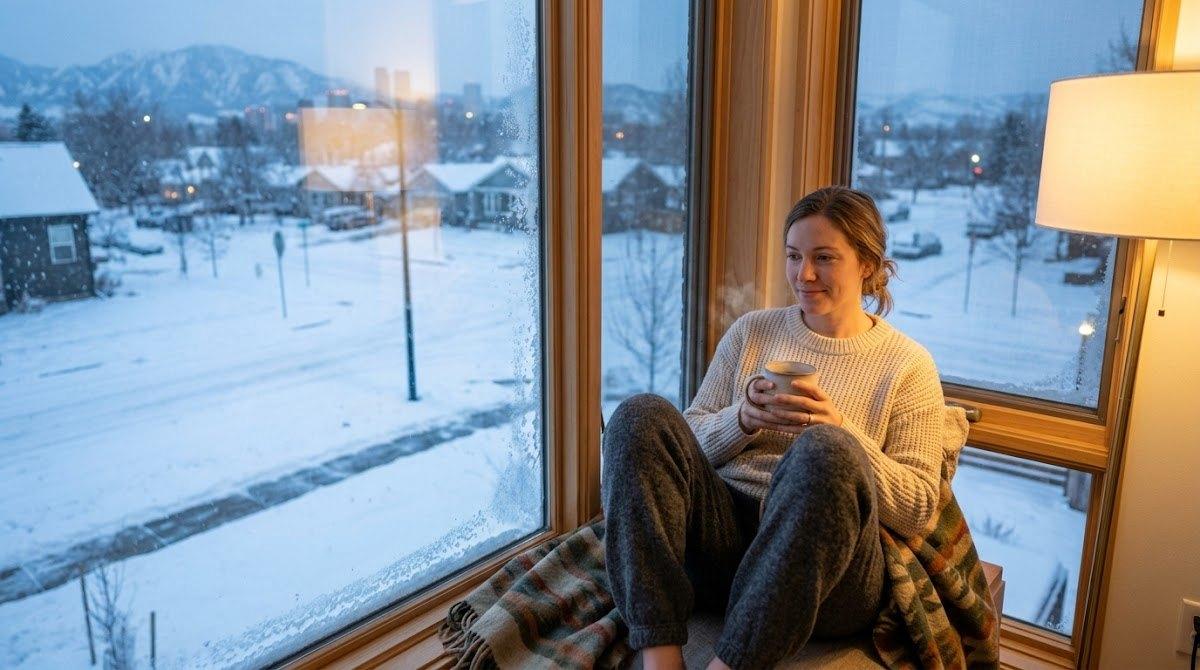
Denver adds another layer to this. Winter here is cold, dry, and windy. That may not sound glamorous, but it does help in specific ways. People spend more time indoors, sweat less, and usually have fewer long stretches of incidental UV exposure.
And that matters after treatment.
Heat can increase redness and irritation after a laser skin treatment. Sweat can also aggravate freshly treated skin. In the cooler months, that is easier to avoid.
Holiday schedules can help too. A few quiet days at home can be useful if you want discreet downtime after resurfacing treatments. Not everyone wants to walk into brunch with flaking skin.
If you are exploring laser treatments in Denver , this is often the time to schedule your laser because recovery fits life better.
Addressing Summer Sun Damage for the Best Results
Think about what spring and summer usually bring. More patios. More hikes. More driving with sunlight hitting the same side of your face. More cumulative sun damage.
By early fall, that damage often looks clearer. Brown spots, uneven pigment, dullness, rough texture, fine lines, and loss of firmness can all stand out more.
This is why fall and winter are such a strong match for correction. You can remove visible signs of summer, resurface the top layers, and finish a treatment series before warmer weather returns.
That timeline matters. If your plan involves multiple visits, the best time to schedule is often early fall. Starting then gives you room to complete treatment before outdoor habits ramp up again.
Navigating Sun Exposure for Optimal Healing
Critical Sun Avoidance Protocols for a Laser Skin Treatment
Sun rules are the part people most want to negotiate. They are also the part that matters most.
A laser skin treatment leaves skin more sensitive to the sun while it heals. If UV hits healing tissue too soon, you can end up with longer redness, delayed recovery, or unwanted pigmentation changes.
Here is the simple version. Avoid sun exposure before and after treatment.
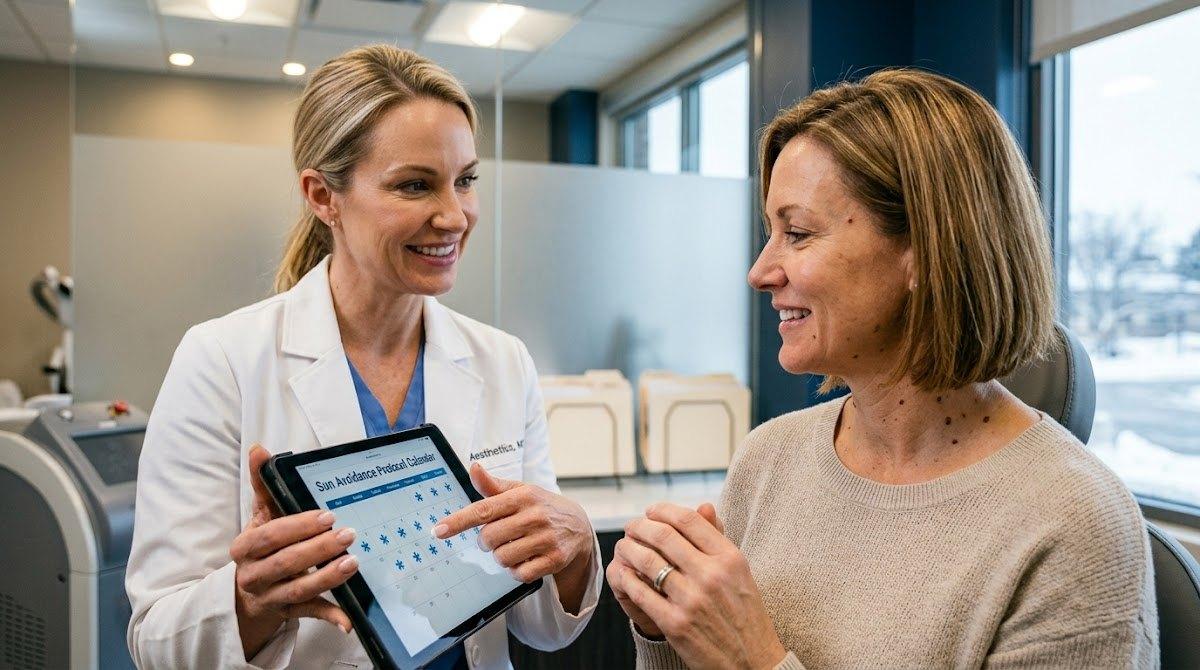
For many devices, direct sun should be avoided for at least one week before your appointment. After mild or moderate treatments, you may need to stay out of the sun for one to four weeks. For deeper laser resurfacing or total resurface procedures, strict sun avoidance can last two to three months.
That is not arbitrary. It is a safety issue.
Tanned skin is also a problem because some types of laser are designed to target pigment. If the surrounding skin contains extra pigment from a tan, the laser may react to the wrong area.
BBL treatments are a good example. Broadband light is excellent for redness, vascularity, and sunspot concerns, but standard guidance is to stay out of the sun for at least one week before and after treatment.
If you spend a lot of time outdoors, talk about that during your consultation . A good plan depends on your skin type, schedule, and skin concerns, not just the calendar.
Understanding Your Laser Treatment Options
Top Med Spa Treatments for Targeted Correction
Not every laser treatment does the same job. Some target redness and pigment. Some resurface the outer layer. Some go deeper into each layer of skin to stimulate repair.
Let’s make it simple.
BBL is a light-based treatment, often grouped with IPL, that helps remove sun damage, redness, and visible vessels. It is one of the gentler treatment options and often works best in a treatment series of three sessions spaced about eight weeks apart.
HALO 2.0 is a hybrid laser skin resurfacing option that combines ablative and non-ablative laser energy. The ablative side treats the top layers, while the non-ablative laser reaches deeper to stimulate collagen production and new collagen.
This helps improve pore size, texture, fine lines, and overall rejuvenation. A clinical study found that combining those approaches produced results similar to ablative-only treatment, with fewer immediate side effects.
Erbium and CO2 are stronger resurfacing tools. These lasers remove the outer layer and trigger healing in deeper skin cells.
Full-field erbium is known for major wrinkle correction and can dramatically improve sun damage. Modern ablative systems are more predictable than older devices, especially when providers follow careful safety steps described in this research review .
Managing Downtime During Colder Months
What to Expect After a Laser Skin Procedure
Downtime varies. That is the honest answer.
After a gentle laser or CoolPeel-style approach, you may see mild redness and feel sunburned for two to three days. These sessions are usually quick and come with minimal downtime.
Deeper laser procedures create more visible healing. Flaking, sensitivity, swelling, and peeling can last several days. Full-field erbium may require six to ten days before skin looks more social again.
Why winter helps is simple. You are less likely to sweat, less likely to overheat, and more likely to keep your skin care routine consistent indoors.
Also, lasers remove dead skin cells and damaged skin as part of the renewal process. That fresh surface needs calm care, not direct UV and intense activity.
Comparison Table: Recovery and Sun Avoidance by Laser Type
| Laser Type | Sun Avoidance Protocol | Expected Downtime/Recovery | Best Seasonal Rationale |
|---|---|---|---|
| BBL | 1 week pre/post | Minimal, series-based | Avoid summer entirely |
| CoolPeel | Post-treatment essential | 2 to 3 days | Great in cooler weather |
| HALO Hybrid | Strict post-treatment | 3 to 5 days | Strong fit for winter downtime |
| Profractional | 1 month post-treatment | About 7 days, improves up to 3 months | Helps prevent melasma flare-ups |
| Full-Field Erbium | Strict post-treatment | 6 to 10 days | Best for winter healing |
| Total Resurfacing (CO2) | 2 to 3 months | 10 to 14 days | Requires serious winter planning |
Preparing Laser Skin for Spring Radiance
Can You Get Treated Year-Round?
Yes, but with a big condition. You need to be compliant.
Highly careful patients can get laser treatment outside fall and winter, even in brighter months. But your skincare, daily SPF, and willingness to avoid sun exposure have to be excellent.
That is why the best time of year for laser is still usually winter. It is not that summer treatment is impossible. It is that winter makes best results easier to protect.
A thoughtful care routine helps maintain refreshed skin long after healing. Some patients enjoy results for months. Deeper ablative work that helps stimulate collagen can last much longer and support a more youthful, smooth complexion and better skin firmness over time.
If you are wondering about the time of year for laser in Denver, think practically. When can you stay consistent? When can you truly avoid sun exposure? When do you have space for recovery?
For most people, that answer points to fall and winter.
Want personalized recommendations and a plan built around your schedule? You can schedule a free consultation to talk through med spa treatments, skin care, and the best time to schedule your laser treatment.
Conclusion
The best time for laser treatment in Denver is usually winter, with fall close behind. Less sun exposure, cooler temperatures, and easier recovery all work in your favor. If you want laser skin treatment with safer healing and optimal results, planning around the season is one of the smartest choices you can make.
Frequently Asked Questions About Best Time for Laser Treatment
What is the best time to do laser?
Fall or winter is usually the best time of year.
Is electrolysis or laser better for upper lip?
It depends on hair color, skin type, and goals.
Can you get laser hair removal with Hashimoto's?
Often yes, but medical clearance may be needed.
What should I avoid before laser?
Sun exposure, tanning, and irritating skincare products.
How frequently should laser be done?
It depends on the treatment series and device.