
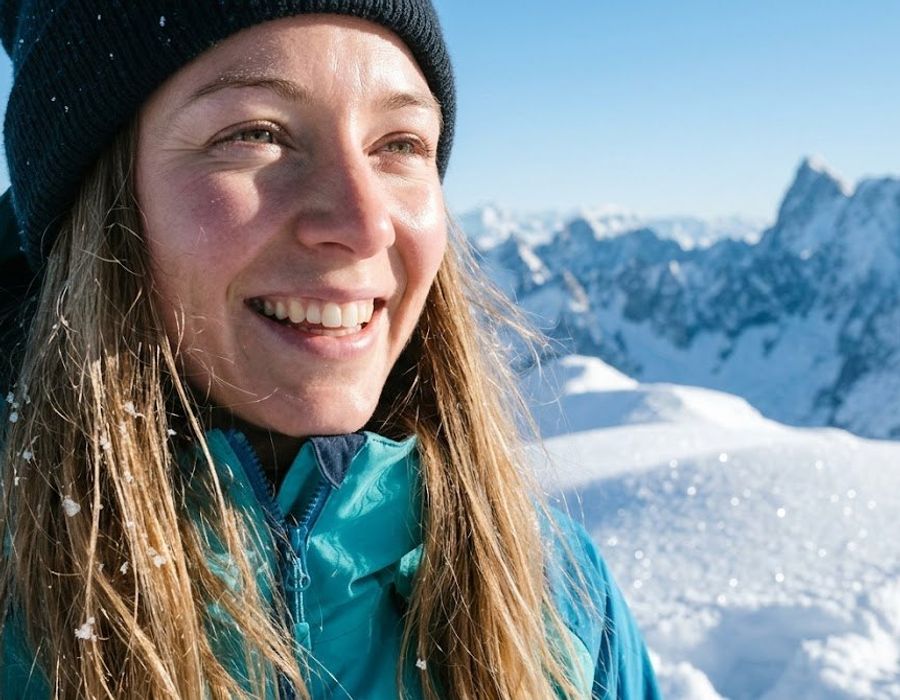
Fresh powder, bluebird skies, and a long day outside can feel perfect.
Your skin may tell a different story. This guide covers how ski days trigger damage, what to do after, and when in-office treatment makes sense.
Why Every Skier Faces a Compromised Barrier on Snowy Slopes
Let’s be honest about what happens on a ski mountain.
You are not dealing with one stressor. You are dealing with altitude, cold air, wind, low humidity, sweat, and reflective snow all at once. That combination can weaken the skin barrier fast.
The High-Altitude UV Threat on Snowy Peaks
Altitude changes the game. According to Medical News Today , UV radiation rises by about 10% for every 1,000 meters you gain. At high altitudes, your chance of UV exposure jumps even if the temperature feels freezing.
Now add snow. Snow and ice can reflect up to 80% of UV rays , which means your face gets hit from above and below. That is why a skier can end the day with sunburn in places they forgot to cover.
Clouds do not save you either. Up to 80% of the sun’s rays can still pass through cloud cover, per Medical News Today . So yes, a gray, snowy morning can still lead to serious sun damage.
UVA is a type of ultraviolet light that penetrates deep into the dermis and breaks down collagen and elastin. UVB is a type of ultraviolet light that affects the epidermis and causes sunburn. Both matter. Both are why broad-spectrum sunscreen belongs in every ski bag.
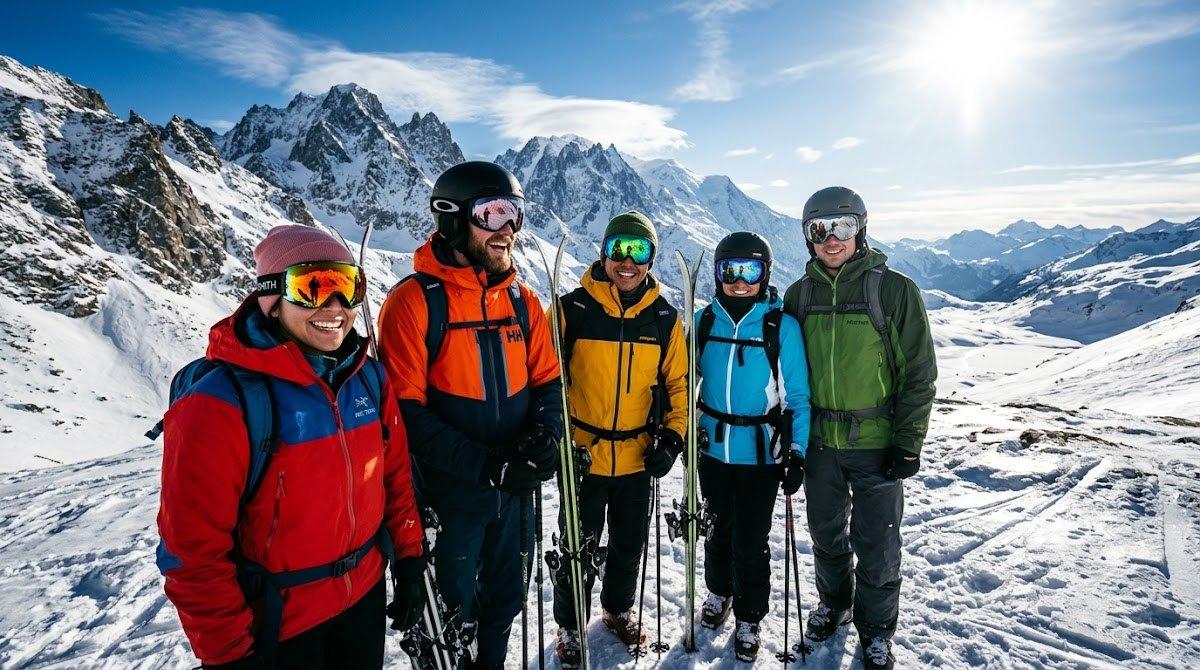
Mechanics of Windburn and Photoaging Risks
Windburn is a skin reaction caused when cold, fast wind strips away natural oils and weakens the barrier that protects deeper tissue.
Here’s the problem. Wind can chap and irritate skin after one run. You may notice pulsing irritation, stinging, or raw patches by lunch. That is not just dryness. It is barrier disruption.
Over time, repeated windburn and UV exposure can create lasting changes:
- Broken capillaries across the nose and cheeks
- Loss of elasticity
- Deep forehead lines
- Greater skin cancer risk
This is where smart skiing skincare matters. The goal is not vanity alone. It is to protect your skin without compromising your skin’s health.
At-a-Glance Environmental Metrics on the Slopes
| Environmental Stressor / Metric | Value / Impact | Authoritative Resource |
|---|---|---|
| UV Radiation Increase | ~10% for every 1,000 meters of altitude gain | Medical News Today |
| UV Reflection from Snow & Ice | Up to 80% reflection of the sun's rays | Cleveland Clinic |
| Cloud Penetration by UV Rays | Up to 80% of sun's rays penetrate cloud cover | Medical News Today |
| Snowy Mountain UV Intensity | Up to 80% more powerful than at sea level | Cleveland Clinic |
How Mountain Air Strips Moisture: Why You Must Hydrate Post-Ski
This part catches people off guard.
Your face can feel oily and still be dehydrated. That happens because mountain air, higher altitudes, and indoor heating all pull moisture from your skin.
Environmental Dehydration and Barrier Burnout
Low humidity speeds up moisture loss. Sweat evaporates quickly, and the skin’s moisture disappears before you notice it. Then you step inside, and indoor heating keeps the cycle going.
That tight feeling after a long day on the slopes is a warning sign. Your skin barrier needs water, lipids, and a protective barrier to recover. If you ignore it, dry skin can chap, crack, and stay irritated for days.
Internal Support for Skin Elasticity
Start from the inside. High altitude can make you lose fluids faster, especially during winter sports. Stay hydrated with water, lemon water, or herbal tea with a pinch of mineral salt if needed.
Food helps too. Omega-3 fats and vitamin C support elasticity and barrier function. Think salmon, flaxseeds, berries, and citrus. Small choices, real payoff.
The Essential Après-Ski Skin Care Ritual After You Hit the Slopes
The best post-ski routine is simple.
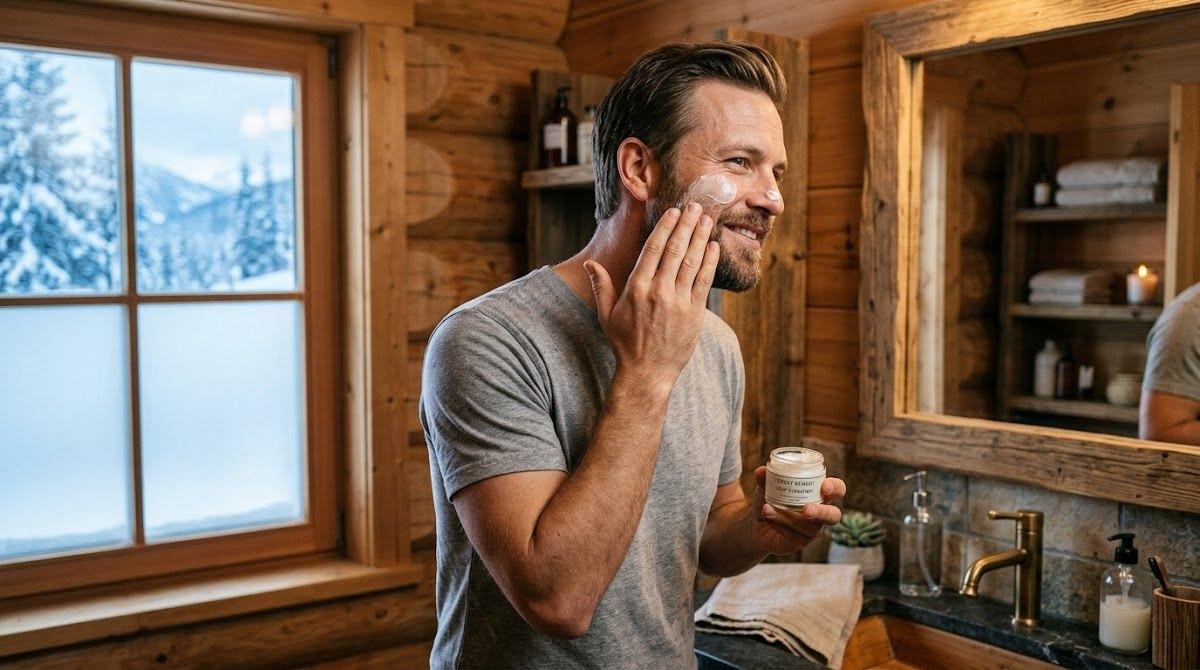
Do less, but do it well. If your face feels hot, stings, or shows redness, now is not the time for harsh exfoliants or strong actives.
Smart Cleansing and Calming Protocols
Use a gentle, fragrance-free cleanser or a fatty balm with lukewarm water. Better yet, choose a hydrating cleanser if your skin feels stripped. Hot water sounds nice after the coldest day, but it can irritate already stressed skin.
For 48 hours, avoid harsh exfoliants, alcohol-based toners, and scrubs. Avoid harsh products that can further weaken the skin barrier. To soothe skin from windburn, use a cool compress, then apply a calming lotion with aloe, chamomile, or calendula.
If irritation lingers or blisters form, see a dermatologist. If you suspect frostbite, get medical care right away.
The Hydration Sandwich: Formulated to Nourish and Moisturize
Think about recovery in layers.
First, apply a hydrating serum or another serum with hyaluronic acid or squalane to damp skin. A serum is a lightweight treatment designed to deliver concentrated ingredients into the skin.
Next, use a rich moisturizer with ceramides, dimethicone, or shea butter within three minutes of washing. This helps keep your skin comfortable and supports the skin barrier.
Last, lock in moisture with an occlusive balm, petrolatum, or recovery oil. A night cream can also work well if you want an extra layer overnight. This is one of the most reliable skiing skincare essentials because it helps moisturize, reduce dryness, and restore skin’s moisture.
Prevention is Key: How to Properly Apply and Reapply Sunscreen
Here’s the truth.
Most sunscreen mistakes are not about buying the wrong formula. They are about not using enough, missing spots, or forgetting to reapply.
Broad-Spectrum Shielding on the Mountain
Use broad-spectrum sunscreen with SPF 30 at minimum. On a ski slope, SPF 50 is the better call. Look for broad-spectrum SPF with zinc oxide or titanium dioxide, which the Cleveland Clinic notes can be helpful for sensitive skin.
Apply sunscreen before you head out. Then reapply every two hours, or sooner if you are sweating or wiping your face. For a skiing adventure, pack a travel-size sunscreen so reapplication is easy on the lift or at lunch.
Do not miss the ears, neck, underside of the chin, and lips. Lips are especially vulnerable in cold air and wind, so use lip balm with SPF and waxes that help protect your skin.
Physical Protection and Avoiding Goggle Acne
Sunscreen matters, but fabric helps too.
Wear goggles, a UV gaiter, and a balaclava to reduce wind contact. Choose moisture-wicking layers so trapped sweat does not sit against your face. A thin barrier balm on the cheekbones can prevent goggle rub and cut down irritation.
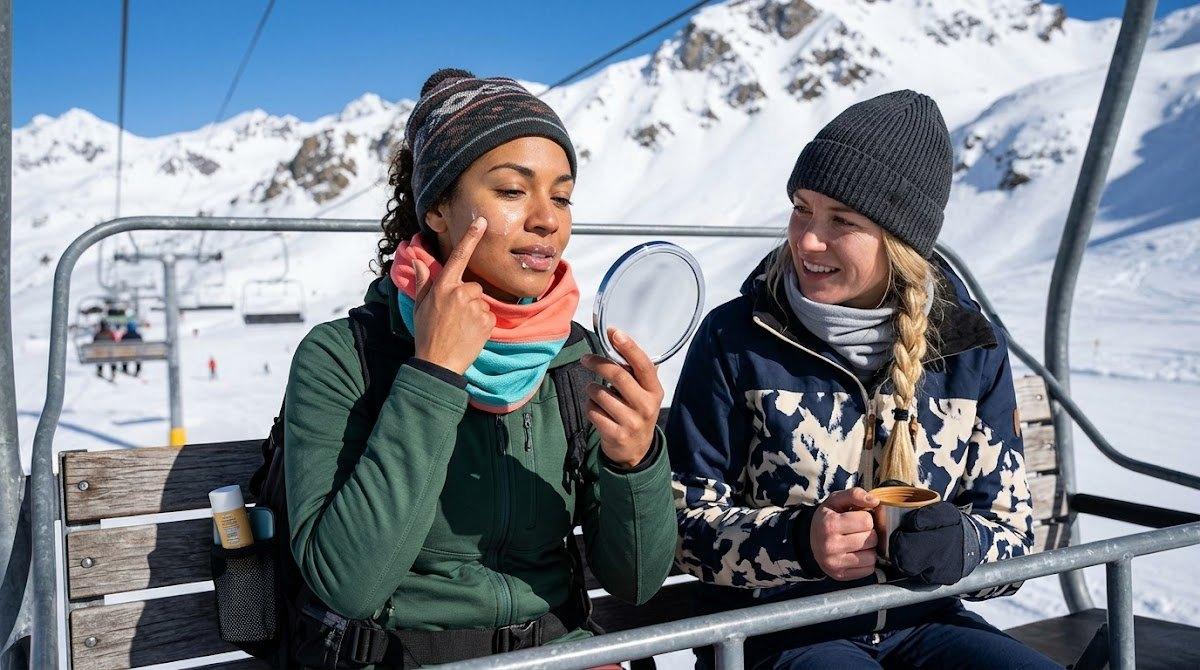
And yes, “goggle acne” is real. Clean goggle foam weekly. Rotate buffs or masks daily. Sweat, sunscreen, and bacteria can build up fast on a snowy trip.
Advanced Clinical and Professional Treatments for Skiers
Sometimes home care is enough.
Sometimes it is not. If skin damage lingers after ski season, in-office options can target texture, pigment, broken vessels, and volume loss more effectively than over-the-counter skin care.
In-Clinic Solutions for Vascular and Pigment Damage
IPL uses pulses of light to treat redness, sun spots, and visible capillaries. Laser resurfacing works deeper to improve texture and stimulate collagen. If rough tone and UVB or UVA-related photoaging are your main concern, laser treatments may be worth exploring.
Chemical peels can also help shed damaged surface cells. A professional chemical peel is often used to address uneven tone, dullness, and lingering sunburn marks after repeated sun protection slips on the slope.
A board-certified dermatologist or experienced dermatology provider can tell you which path fits your skin healthy goals best.
Deep Dermal Hydration and Volume Restoration
Some concerns sit deeper than the surface. Chronic moisture loss, etched lines, and volume changes may respond better to injectables.
Microdroplet hyaluronic acid treatments can hydrate the dermis for a smoother look. Dermal fillers can soften static lines and restore support through the mid-face. If that is the concern, dermal fillers may help hydrate skin and improve structure after seasons of UV exposure.
When should you book a visit? If a spot changes color, shape, or starts to bleed, see a dermatologist or dermatology professional promptly. That kind of change needs attention, especially with skin cancer risk in frequent skier populations.
Conclusion
Ski season can be rough on your face, but recovery is doable. Focus on gentle cleansing, barrier repair, sunscreen, and steady hydration. If windburn, pigment, or texture stick around, professional treatment can help. A smart skiing skincare routine lets you enjoy every run while keeping your skin strong, calm, and resilient.
Frequently Asked Questions About Ski Season Skin Damage Repair
How to repair winter damaged skin?
Use a gentle cleanser, rich moisturizer, and barrier balm. Avoid scrubs and help skin hydrate for several days.
How to treat dry skin after skiing?
Wash with lukewarm water, apply a hydrating serum, then a night cream to lock in moisture.
What do skiers put on their face?
Most use sunscreen, lip balm, moisturizer, and a balm under goggles for extra protection.
Can damaged skin be restored?
Often, yes. Good home care and treatments in dermatology can improve barrier repair and appearance.
What does winter dermatitis look like?
It often looks red, itchy, flaky, and rough. In worse cases, skin may crack or sting.