

You booked a consultation because smoother skin sounds great. Then one question changes everything: are you even a safe candidate?
This guide covers who should skip microneedling, when to delay treatment, what FDA warnings matter, and which alternatives may be a better fit.
Understanding Absolute Microneedling Contraindications
Microneedling is a procedure that uses a sterile needle device to create controlled micro-injuries in the skin. The goal is to stimulate collagen and elastin production. Done well, it can improve tone and acne scars. Done on the wrong person, it can worsen the very issue you want to fix.
That’s why microneedling contraindications matter so much.
Active Skin Infections and Inflammatory Treatment Areas
If you have an active skin infection, the treatment should not happen. Full stop.
This includes inflammatory acne, open lesions, herpes, warts, and rashes from contact dermatitis. Working over active acne can spread bacteria and increase inflammation. The AAD guidance makes the point clearly: proper administration helps prevent complications.
If you are dealing with cold sores or a herpes outbreak in the treatment area, that is also an absolute contraindication. The same goes for any rash, unexplained irritation, or skin that feels raw and reactive. Your skin has fully healed first. Then you can revisit options.
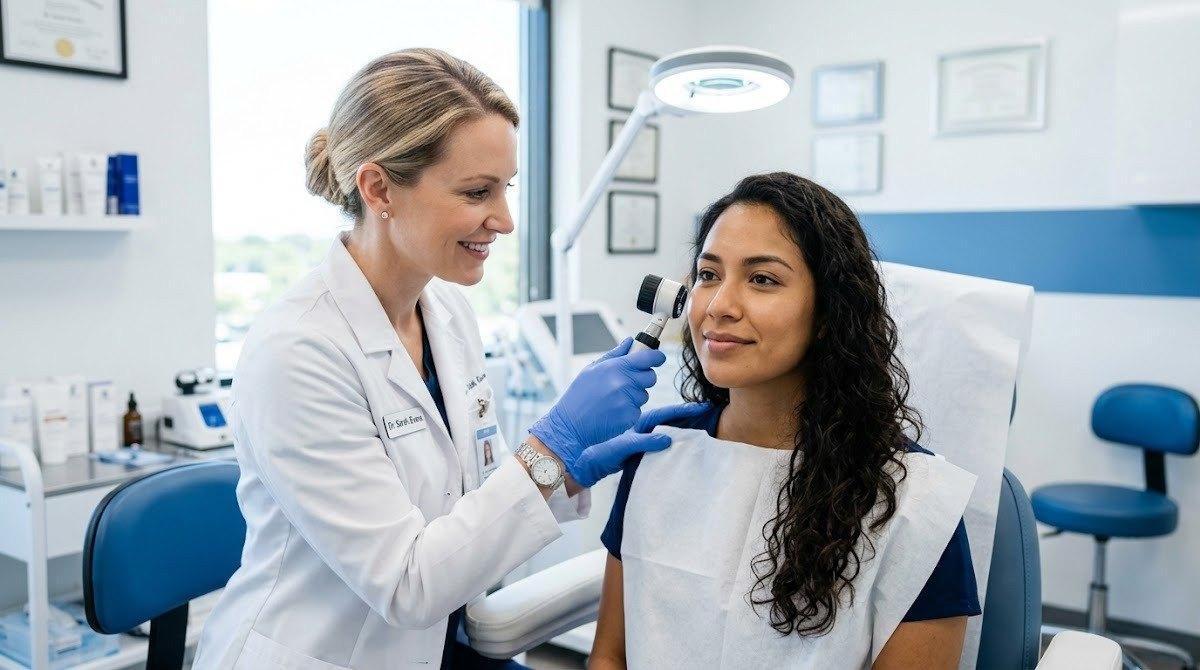
Chronic Skin Conditions and Keloidal Scarring Tendencies
Some skin conditions need extra caution. Moderate or severe psoriasis and eczema can flare when the barrier is disrupted. Rosacea may also worsen if your skin is already inflammatory and prone to redness.
A keloid is a raised scar that grows beyond the original injury. If you are keloid prone, microneedling may trigger disfiguring scar tissue instead of smoother texture. The Cleveland Clinic notes the risk of abnormal scarring with skin procedures.
Also, watch any changing mole, bleeding spot, or growth without a diagnosis. If something is changing shape, color, or size, medical clearance should come before any cosmetic treatment.
Systemic Health Concerns, Blood Disorders, and Immunosuppression
Now for the less visible factors.
If you have a bleeding disorder, abnormal blood clotting, or take blood thinners like warfarin, aspirin, or ibuprofen, your provider may advise against treatment or ask you to delay. These medications can interfere with normal healing and raise the chance of bruising or bleeding.
People with a compromised immune system also face a higher risk of infection. This includes active chemotherapy, radiation, and some autoimmune situations. The StatPearls review also points to immunosuppression as a major concern.
Pregnancy deserves a separate note. Pregnancy is not always listed as an absolute no, but many practices postpone elective treatment during pregnancy because safety data is limited and skin can be more reactive.
Uncontrolled diabetes is another concern because it can compromise healing. If you have any medical condition that affects repair, circulation, or immune control, your medical history should guide the plan.
Important Clinical Factors That Require You to Delay Treatment
Not every red flag means never. Some mean not yet.

If you recently had neurotoxin injections , timing matters. A recent injection with a muscle relaxant should not be disturbed by microneedling near that area. The reason is simple: you want to avoid toxin diffusion into nearby muscles. In many cases, your provider may recommend waiting about 2 weeks.
Medication matters too. Isotretinoin and other severe acne medication plans often require a medically supervised pause before treatment. Certain topical retinoids, exfoliating acid formulas, and strong skin care products may irritate the barrier and should be stopped based on professional advice. Some clinicians also recommend pausing active skincare for 24 hours or longer before and after treatment.
Recent procedures count as well. If you had chemical peels, laser work, or intense pulsed light, your skin may need 2 weeks or more before another procedure. If the area looks pink, tight, or flaky, that is your sign to delay until recovery is complete.
FDA Safety Warnings Regarding Radiofrequency (RF) Microneedling
Here’s where nuance matters.
RF microneedling is not the same as standard microneedling treatment. It adds heat energy through the microchannel to resurface and tighten skin. That can be helpful, but it also adds risk.
On October 15, 2025, the FDA issued a safety communication about serious adverse events linked to certain RF devices. Reported problems included burns, permanent scarring, fat loss, facial disfigurement, and nerve injury.
These devices are Class II devices cleared through the FDA 510(k) process. Because of this, they should only be used in a clinical setting by a licensed provider, never at home.
General Risks, Recovery Metrics, and What to Expect After Your Session
Normal recovery after microneedling usually includes redness, mild swelling, and some dryness for 2 to 3 days. For some people, redness lasts closer to 3 days to 5 days. Blistering, prolonged bleeding, or signs of infection are not normal.
If you have a darker skin type, post-inflammatory pigment changes are possible. Research on hyperpigmentation shows why careful settings, sun control, and daily sunscreen matter.
Below are helpful treatment metrics:
| Metric | Clinical Value / Timeline | Source |
|---|---|---|
| Needle Length Range | 0.5 mm to 2.0 mm | Cleveland Clinic & StatPearls |
| Neocollagenesis Depth | 5 to 600 µm with 1.5-mm needle | StatPearls |
| Collagen Increase | Up to 400% after 4 sessions | StatPearls |
| Final Results | 3 to 6 months | Cleveland Clinic |
| Persistence | 5 to 7 years | StatPearls |
Sessions are often spaced 3 to 8 weeks apart. That spacing gives the skin time to repair.
Premier Clinical Alternatives to Microneedling for Skin Rejuvenation
If you are not a good candidate for microneedling, you still have options.

For resurfacing, laser treatments can target pigment, dullness, and fine lines. Options in the brief include Clear + Brilliant, MOXI, LaseMD Ultra, PicoSure Pro, Fractional Er:YAG, and Fractional CO₂. The NewBeauty guide outlines several noninvasive choices.
Other alternatives include microdermabrasion, dermal stamping, biostimulatory injectables, and chemical peels. Some plans combine in-office care with topical support. Research on the OS-01 peptide suggests advanced topical formulas may support daily skin health.
If you want to learn about candidacy and process details, our microneedling service page explains more.
Making an Informed Decision for Your Aesthetic Journey
The best treatment is not always the trendiest one. It is the one that matches your skin, your medication profile, and your healing ability.
A thoughtful consultation can pinpoint risk, review key contraindications, and help prescribe a safer path forward.
Conclusion
Microneedling can deliver beautiful results, but only when the right person gets the right treatment at the right time. Active infection, certain skin conditions, immune compromise, recent procedures, and medication use can all change the plan. Careful screening protects your results and often leads to a safer, smarter alternative.
Frequently Asked Questions About Microneedling Contraindications Who Should Avoid
Who is a bad candidate for microneedling?
Anyone with active infection, inflammatory acne, keloid risk, uncontrolled diabetes, or healing issues may not be a safe candidate.
Can I have microneedling if I have lupus?
Maybe not. Lupus can affect immune response, so you need individualized medical clearance.
Do I need to stop azelaic acid before microneedling?
Often, yes. Azelaic acid can irritate skin, so many clinicians ask you to stop it briefly before treatment.
Why shouldn't you do microneedling?
You should avoid it when the procedure could worsen skin, trigger scarring, or compromise healing.
Does microneedling work for a 50 year old woman?
Yes, it can help stimulate collagen and improve texture if her skin and health profile are appropriate.
Which is safer, microneedling or Botox?
Neither is automatically safer. It depends on your goals, timing, and risk factors.