

Some people carry a stain stick everywhere. Others keep extra socks in the car or avoid certain colors, fabrics, and social moments altogether.
If that sounds familiar, you are not alone. Below, we cover the causes of excessive sweat, the most effective medical solutions, and what to expect if you seek care.
Understanding the Heavy Burden of Excessive Sweat
What Is Hyperhidrosis? Defining Your Type of Hyperhidrosis
Hyperhidrosis is a chronic skin condition characterized by sweating far beyond what your body needs for cooling. In plain terms, your body produces excessive sweat even when heat or exercise do not explain it.
That matters more than many people realize.
According to the International Hyperhidrosis Society , nearly 5% of the global population lives with this issue. In the United States, about 3% of adults ages 20 to 60 have diagnosed hyperhidrosis patients in medical records.
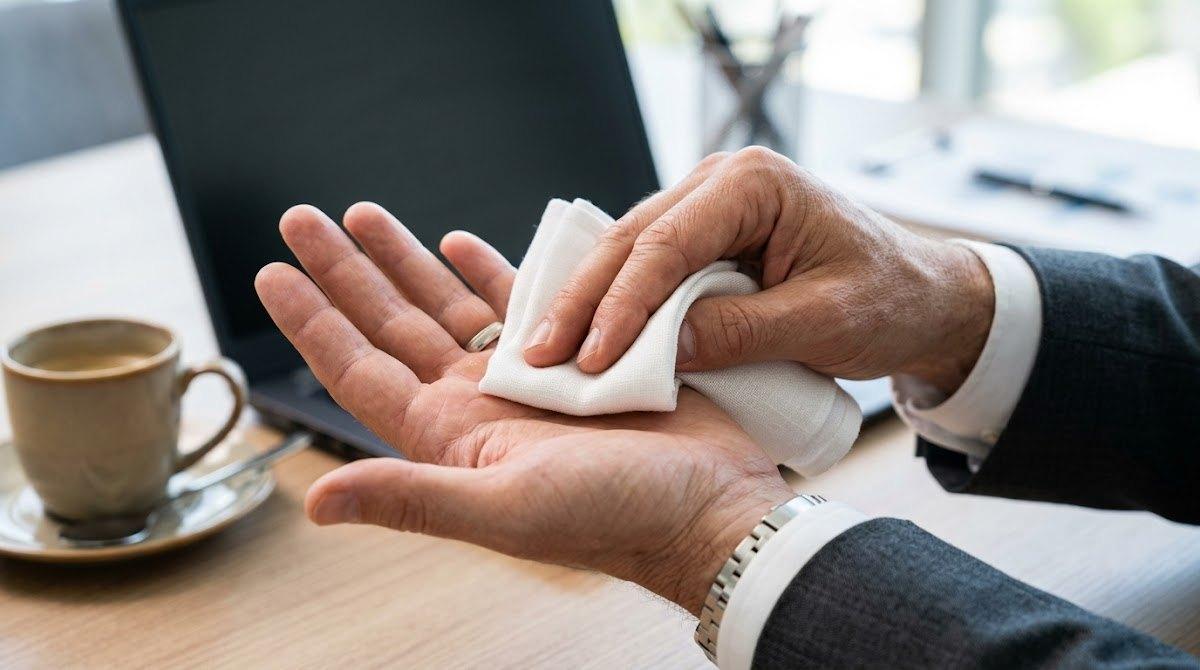
There are two main forms.
Primary focal hyperhidrosis is the most common type of hyperhidrosis. It often starts before age 25, tends to run in families, and is tied to an overactive nervous system response. It is not caused by another medical condition.
Secondary generalized hyperhidrosis is sweating that is caused by an underlying illness or a medication side effect. This form often includes night sweating and may improve once the root cause is addressed.
If you want a deeper look at local care, our hyperhidrosis services page explains how diagnosing and treating this condition works in a clinical setting.
Common Sweaty Zones: From Underarms to Hands and Feet
Primary hyperhidrosis usually shows up on both sides of the body. So if your left palm is soaked, your right palm often is too.
The most common concern for many people is excessive palm sweating, but the underarms, soles, and face are also frequent trouble spots. Some people sweat in one area. Others deal with several areas of your body at once.
| Affected Body Area | Medical Terminology |
|---|---|
| Armpits / Underarms | Axillary hyperhidrosis |
| Palms of Hands | Palmar hyperhidrosis |
| Soles of Feet | Plantar hyperhidrosis |
| Forehead and Cheeks | Craniofacial hyperhidrosis |
Primary axillary hyperhidrosis refers to excessive underarm sweating. It often causes visible stains, discomfort in fitted clothing, and daily frustration.
Identifying the Culprits: Triggers and Underlying Causes of Sweating
Environmental and Lifestyle Triggers
Here’s the tricky part.
Even when sweating is chronic, certain triggers can still make episodes worse. Emotional stress is a big one. Anxiety, fear, and tense social situations can fire up the nerve signals that activate each sweat gland.
Heat matters too. So does humidity. Standard workouts, fast walking, and even mild exertion can lead to excessive sweat that feels wildly out of proportion.

Food can also push sweat production higher. Common triggers include:
- Spicy meals
- High-protein dishes
- Fatty, sugary, or salty foods
- Caffeine
- Alcohol
If your symptoms flare after heat or exercise, that does not automatically mean they are normal. It may still point to overactive sweat glands.
Medical Concerns and Medications Driving Sweat Production
Sometimes sweating is not primary at all. It is a condition that causes sweating because something else is going on.
Secondary sweating may be linked to hyperthyroidism, diabetes, menopause, obesity, anxiety disorders, heart disease, tuberculosis, or Parkinson’s disease. In those cases, the issue is often caused by an underlying medical condition.
Medications can do it too. Drugs for depression, thyroid disease, blood pressure, breathing issues, pain relief, inflammation, diabetes, and reflux may increase sweating. Examples listed in the brief include sertraline, bupropion, levothyroxine, insulin, lisinopril, albuterol, hydrocodone, naproxen, and omeprazole.
This is why a good consultation matters. A provider may recommend looking at the full picture before jumping into a cosmetic fix.
Navigating Clinical Diagnosis and Hyperhidrosis Management
What to Expect at Your Diagnostic Consultation
A proper workup starts with questions. Your provider will review your medical history, current medications, family history, previous treatments, and sweating patterns. They also want to know how often the problem interrupts normal activities.
Doctors often look for symptoms that last at least six months, plus signs like symmetrical sweating, onset before age 25, family history, or sweating that eases during sleep.
Testing may include lab tests to rule out thyroid issues or low blood sugar. An iodine-starch test, also called a starch paper test in some settings, can highlight the affected area by turning dark where moisture collects. Paper measurements may also be used to weigh sweat output.
A primary care provider can start the conversation, but many people also see a dermatologist with experience in dermatology and sweat disorders. The American Academy of Dermatology offers guidance on common skin conditions, including sweating concerns.
When you schedule a consultation , the goal is simple: create a personalized plan that fits your symptoms, your lifestyle, and the severity of the issue.

Exploring Your Treatment Options for Excessive Sweating
Quick-Acting Clinical Solutions: Topical Therapies
For mild to moderate cases, treatment options for excessive sweating often start with prescription antiperspirants and other topical products.
Prescription antiperspirants usually contain aluminum chloride at strengths between 6% and 20%. They are stronger than over-the-counter products and are applied to dry skin at bedtime, then rinsed off in the morning. They can help reduce excessive sweat, though skin irritation can happen.
There are also medicated options. Qbrexza is an FDA-approved wipe for primary axillary hyperhidrosis in patients age 9 and older. Sofdra is a newer gel used nightly on dry underarms. After applying it, wash your hands right away.
These treatments work by reducing sweat production through blocked nerve signals to sweat glands.
Botulinum Toxin Injection Therapy: The Premium Standard
Let’s talk about Botox.
Botox is one of the most effective ways to treat excessive sweating in a focused area. Botulinum toxin works by blocking the nerves that trigger sweat glands. More specifically, botulinum toxin injections interrupt the chemical messages that tell overactive glands to turn on.
This treatment for hyperhidrosis is FDA-approved for certain localized cases. Most people notice improvement in excessive sweating within 7 to 10 days.
Results vary by location:
- Underarms or hands: 3 to 10 months
- Feet: 3 to 6 months
- Face: up to 4.5 months
The treated area may need several injections in one visit, especially for palm or foot sweating. You will likely need repeat treatments to maintain dryness, and some patients repeat the treatment about every 6 months. That said, repeat treatments can sometimes lead to longer-lasting control sweating benefits over time.
If you are curious about Botox for sweat control, our neurotoxin treatments page explains how injection therapy can reduce sweating in targeted zones.
Energy-Based and Specialized In-Office Treatments
Not every treatment option involves needles.
miraDry uses microwave energy to permanently damage sweat glands in the underarm area. It can also reduce odor and hair. Many people need one or two sessions.
Brella is an in-office patch that uses a chemical reaction to generate heat and temporarily inactivate sweat glands in the underarms for a few months.
Iontophoresis is another proven choice, especially for hands or feet. During iontophoresis, you soak your hands or feet in water while a gentle electrical current passes through. It is often used several times per week at first, then less often for maintenance.

Oral Medications for Full-Body Hyperhidrosis Management
When sweating is widespread, oral medications may help reduce sweating across the body. Glycopyrrolate and oxybutynin are common examples.
These medicines work on the nervous system to lower signals that increase sweat production. A clinician may prescribe them for generalized hyperhidrosis or for people who do not respond well to other care.
Beta-blockers like propranolol may also help if symptoms hit during public speaking, presentations, or other stress-heavy events.
Surgical Options: When a Surgeon Is Required
Surgery is usually not first-line care. Still, it has a place.
For underarm cases, a surgeon may remove or destroy sweat tissue through curettage, liposuction, laser techniques, or sweat gland removal. These procedures target the affected area directly.
For severe hand sweating, endoscopic thoracic sympathectomy, also called sympathectomy, may be considered. In this procedure, a surgeon aims to block the nerves that trigger sweating by cutting or clamping nerves that control sweating signals.
The tradeoff is real. Compensatory sweating can happen afterward, meaning sweating shifts to the back, abdomen, or legs. Because of that, endoscopic thoracic sympathectomy is usually reserved for select cases after other treatment of hyperhidrosis fails.
Determining If You Are a Candidate for Hyperhidrosis Treatment
So, who is a candidate for hyperhidrosis treatment?
You may be a strong candidate for hyperhidrosis if over-the-counter products have failed, your clothes or shoes are often damp, or the problem causes stress, odor, cracking skin, or infections. It also depends on the severity, the areas involved, and whether the sweating is primary or caused by an underlying issue.
A care provider may recommend starting with prescription antiperspirants, topical medication, iontophoresis, oral medications, or Botox before discussing a surgeon. The best plan is the one that fits your body and your goals.
Lifestyle Integration and Everyday Sweat Relief
Medical care helps, but daily habits still matter.
Choose breathable fabrics like cotton, wool, and silk. Use moisture-wicking socks. Rotate shoes, especially if your feet stay sweaty. Hydrate well, and limit foods that ramp up sweating.
After some procedures, simple steps like over-the-counter pain medication and ice may provide relief while you heal. Most people can return to normal activities quickly, depending on the treated area.
Reclaiming Your Confidence and Enhancing Your Quality of Life
Excessive sweat is not just annoying. It can shape how you dress, work, socialize, and move through the day.
The good news is that modern hyperhidrosis treatment can help reduce sweating, protect your skin, and make daily life easier. From prescription topicals to Botox, miraDry, iontophoresis, and surgery, there are real options for reducing sweat production and getting lasting relief.
Conclusion
If excessive sweat is affecting your comfort or confidence, you do not have to shrug it off. The right diagnosis can reveal the cause, and the right plan can treat excessive sweating safely and effectively. With expert guidance, many people regain control, feel drier, and get back to life with far less stress.
Frequently Asked Questions About Hyperhidrosis Treatment Am I Candidate
How do you confirm if you have hyperhidrosis?
A clinician reviews symptoms, timing, triggers, and may use lab tests or an iodine-starch test.
Does insurance cover hyperhidrosis treatments?
Sometimes. Coverage depends on the treatment option and your plan.
Will hyperhidrosis ever go away?
Primary forms usually do not fully go away, but treatment can control sweating well.
What kind of doctor should I see if I think I have hyperhidrosis?
Start with a primary care provider or dermatologist.
Is hyperhidrosis just anxiety?
No. Anxiety can worsen it, but it is not the only cause.
Can a blood test detect hyperhidrosis?
Not directly. Blood tests help rule out another medical cause.