

You book your appointment, get the injections, then start checking the mirror by dinner. That’s normal. Most people want a clear, honest timeline for what happens next.
This guide walks through Dysport results day by day, what to expect after treatment, when peak smoothing happens, and how to help your results look even and natural.
Understanding Dysport: How Dysport Works Beneath the Skin
Understanding Dysport starts with one simple point. Dysport is a neuromodulator used to soften dynamic lines caused by repeated facial movement. It is an FDA-approved abobotulinumtoxinA treatment for moderate-to-severe frown lines, and it is also commonly used on the forehead and around the eyes.
Here’s what that means in plain English.
Dysport works by blocking signals between nerves and the targeted facial muscles. When those signals are reduced, the muscles to smooth expression lines can relax. Because of this, skin does not fold as deeply when you make facial expressions. Over time, that helps reduce wrinkles and soften fine lines.
Think about it this way. A dynamic wrinkle forms because the same muscles contract again and again. Dysport relaxes muscles in the treated area so those repeated folds do not press as hard into the skin. That is why it is often chosen for frown lines between the eyebrows, glabellar lines, forehead lines, and crow’s feet.
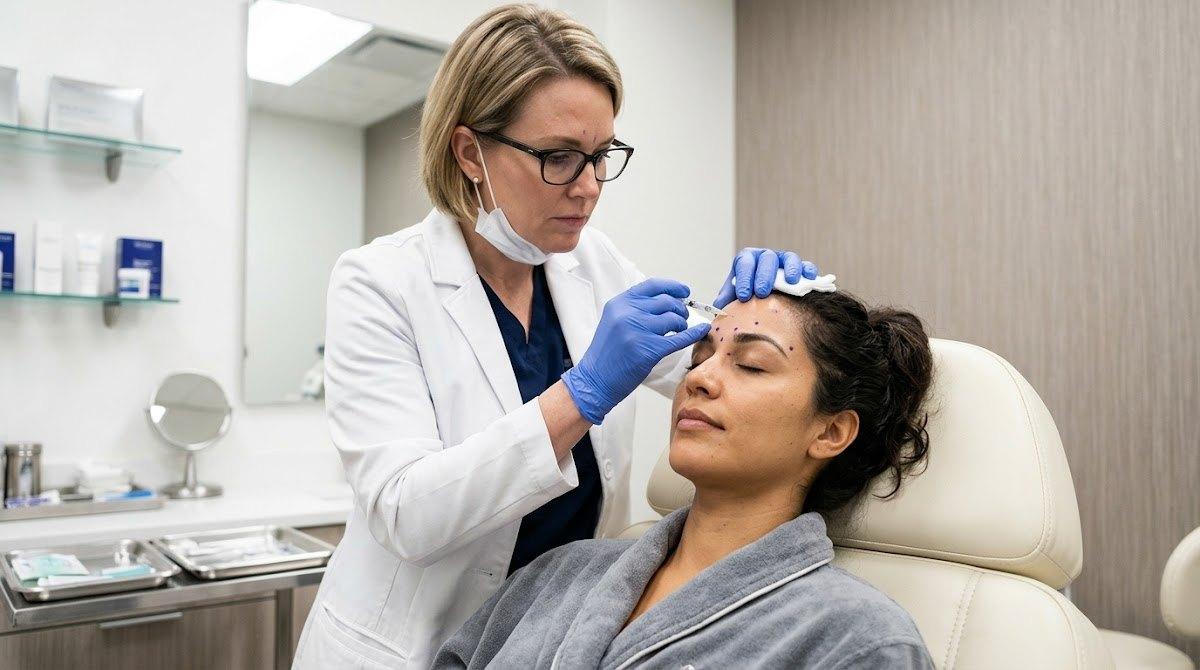
Dysport also has a reputation for a softer spread. In aesthetic use, Dysport spreads smoothly across broader areas like the forehead, which can support natural-looking results when placed by an experienced injector. That wider diffusion is one reason some people choose Dysport for areas like the forehead where even blending matters.
As for safety, minor redness, swelling, or tenderness at the injection sites can happen. These short-term reactions usually fade quickly, though some mild effects of Dysport can linger up to two weeks in certain cases. Serious complications are unusual, and side effects are rare when treatment is done appropriately.
If you want a broader overview of wrinkle relaxers, our page on neurotoxin treatments explains how these products work and what they can treat.
What to Expect During a Typical Dysport Treatment Session
A Dysport treatment is fast. In most cases, one Dysport treatment typically takes 10 to 20 minutes, and almost always under 30. That makes it easy to fit into a lunch break or a busy afternoon.
The process is straightforward. First, your provider cleans the treatment area. A numbing cream can be used, but many people skip it because the injection feels like a quick pinch. Then small amounts of product are placed into the targeted muscles with a very fine needle.
That’s it.
A typical Dysport session has minimal downtime, so you can return to most daily plans right away. You may have slight redness or tiny raised bumps right after Dysport, but those usually fade within hours after treatment.
If you’re considering Dysport, the most important step happens before the first injection. A professional Dysport consultation helps match dosage, placement, and technique to your facial anatomy, muscle activity, and aesthetic goals. That matters more than people realize.
Set Realistic Expectations: The Complete Dysport Timeline
Let’s set realistic expectations before we get into the daily timeline.
You won’t see Dysport results the second you leave your appointment. Since Dysport needs time to interact with nerve endings, the initial effects of Dysport show up gradually. Some patients notice changes early, but full results take longer. Results can vary from person to person, and they also vary based on dose, muscle strength, and the treatment area.
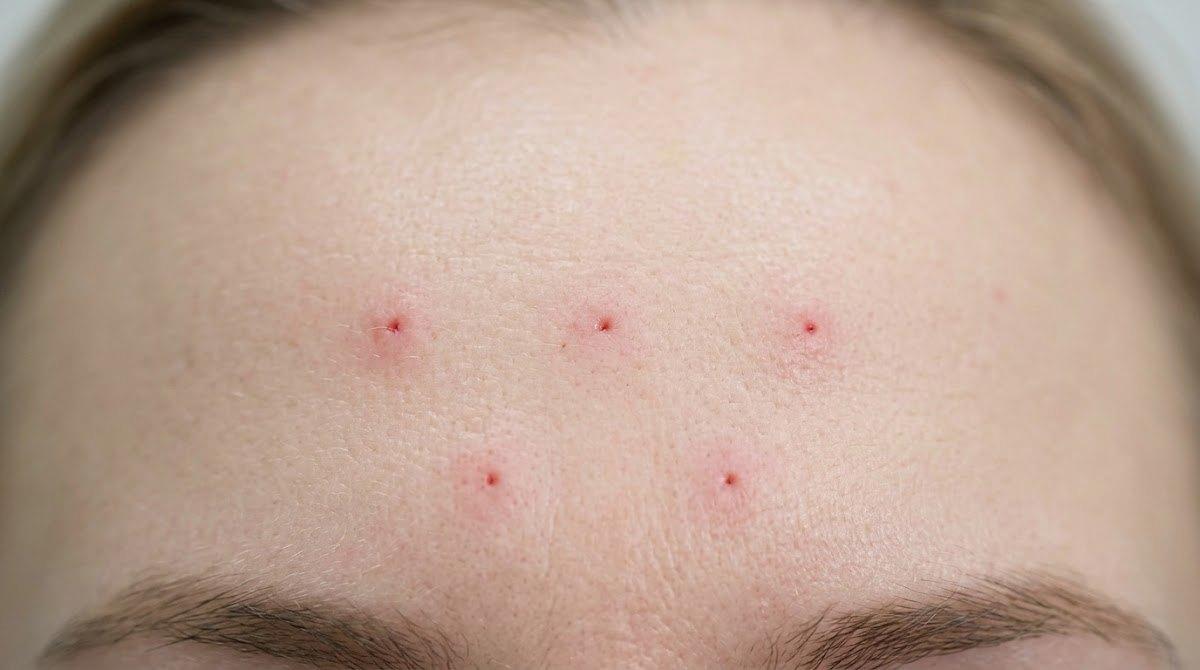
Day 0: The Day of the Injection
On Day 0, expect small bumps, mild redness, or slight swelling at each injection spot. This is a normal response to the needle and usually settles within 1 to 2 hours.
What you probably won’t see is wrinkle improvement. On the day of the injection, Dysport’s effects are not visible yet because the product still needs time to work beneath the skin.
This part matters. Avoid touching the treated area, avoid rubbing, and hold off on makeup for the first several hours. Rubbing the treated skin too soon can prevent the product from settling where it should and may push it toward unintended areas.
Days 1-2: How Long Does Dysport Take to Show?
Day 1 can feel uneventful. The skin often looks normal again, with redness mostly gone. You still may notice mild sensitivity, but most people see no visible smoothing yet.
By Day 2, subtle changes can begin. It may become harder to fully frown or lift part of the eyebrow the way you normally do. Those are the initial effects within the muscles, even if the mirror is still giving you mixed signals.
Some people see results quickly. In one clinical study, about 35% of patients notice visible improvement by Day 2. So if you are wondering how long does Dysport take, early onset often begins here, though not everyone moves at the same pace.
Tracking Your Dysport Results Day by Day (Days 3-7)
This is where the shift usually becomes easier to spot.

By Day 3, clearer softening often starts to appear. Forehead lines may look lighter. Frown lines can seem less sharp. Friends may not know what changed, but they may notice you look more rested.
Days 4 and 5 are when many people see major progress. The targeted muscles calm down more, and dynamic lines fade in a more obvious way. Dysport often delivers smoother skin in this window, especially in strong glabellar movement.
By Days 6 and 7, Dysport results day by day are usually close to complete. Any minor unevenness from the earlier phase often settles out. If you were worried on Day 2, this is usually the point where confidence kicks in.
Days 8-14: Reaching Peak and Best Results
Peak smoothing tends to happen between Days 10 and 14. This is when full effects are generally in place, and your best results become easier to judge.
At this stage, treated facial muscles are fully relaxed, but your face should still look like you. The goal is not a frozen look. The goal is softer movement and smoother skin with natural expression.
This is also the best time for after photos or a follow-up visit if you want small adjustments. If you want to see Dysport results day by day in a useful way, take photos in the same lighting on Day 0, Day 3, Day 7, and Day 14.
Comparison Table: Day-by-Day Onset Averages
| Timeline Phase | Expected Visible Results | Skin & Injection Site Status |
|---|---|---|
| Day 0 | No wrinkle reduction | Minor bumps/redness (fades in 1-2 hours) |
| Day 1 | Little to no change | Skin looks normal; mild sensitivity possible |
| Day 2-3 | Initial onset; lines soften | ~35% see visible wrinkle reduction |
| Day 4-7 | Major reduction; nearly full results | Dynamic wrinkles visibly fade |
| Day 8-14 | Peak smoothness achieved | Muscles fully relaxed; natural expressions |
How Long Will the Results Last After Your Dysport Injections?
Now the next big question. Long Dysport results do not last forever, but they do last long enough to make a clear difference for most people.
On average, Dysport typically lasts 3 to 4 months. In some cases, the results last longer, up to 5 months. Others may notice fading closer to the 2 to 3-month mark. Dysport results typically fade gradually as normal nerve signaling returns and muscle activity increases again.
A few factors shape how long Dysport lasts:
- Physiology matters. Faster metabolism, stronger muscle strength, and more active facial muscles may shorten duration.
- Technique matters. Dose, placement, and injector skill affect how long the results last.
- Lifestyle matters. Sun exposure, stress, and smoking may cause results may fade sooner.
So yes, the timeline can vary based on more than the product alone. Factors like muscle strength, movement patterns, and the exact treatment area all play a role.
Dysport vs. Botox: Which Delivers Faster Smoothing?
People ask about Dysport and Botox all the time, and the comparison makes sense. They are both neuromodulators. They both relax expression lines. But they are not identical.

The biggest difference for many patients is onset. Dysport offers a quick start, with many people noticing initial changes in 2 to 3 days. Botox often takes 3 to 7 days to begin working, according to Healthline.
Another difference is diffusion. Dysport’s formula tends to spread a bit wider, which can be useful in larger zones like the forehead. A review article notes differences in spread and clinical behavior among botulinum toxin products. Botox, by contrast, stays more localized, which may be useful for smaller, precise areas.
That said, both Dysport and Botox offer similar overall longevity, balanced value, and strong safety profiles. Choosing between Botox and Dysport is less about which one is universally better and more about what fits your anatomy, movement pattern, and goals.
If your priority is faster onset, many people choose Dysport. If your priority is tighter localization, Botox may be discussed. Either way, a skilled injector matters more than brand loyalty alone.
6 Expert Tips to Get the Best Results from Your Dysport Treatment
Want to achieve optimal results? Good aftercare helps. These habits are simple, but they can make your Dysport treatment go more smoothly.
1. Stay Upright for 4 Hours Post-Injection
Stay upright for at least 4 hours after treatment. Do not lie flat or nap during that window. This step helps prevent the product from shifting into unintended areas, which can affect an eyebrow or nearby muscle.
2. Skip the Gym for 24 Hours
Avoid strenuous exercise for the first 24 hours, and ideally 24 to 48. Heavy workouts increase blood flow and can raise the chance of swelling or bruising after an injection.
3. Do Not Touch or Massage the Face
Hands off. For the first 24 hours, avoid rubbing, pressing, or massaging the treatment area. Also skip facials, aggressive skincare, and anything that puts pressure on the injection sites.
4. Perform Gentle Facial Exercises
This one surprises people. Light movement such as smiling, frowning, or raising your brows in the first few hours may help Dysport works into the targeted facial muscles more efficiently. Keep it gentle, not exaggerated.
5. Avoid Direct Sun and High Heat
Heat is not your friend right after an injection. Skip saunas, hot tubs, and hot yoga for a day or two. Protecting your skin from UV exposure can also help support smoother skin and more consistent wear.
6. Stick to a 3-4 Month Maintenance Schedule
Do not wait until everything has fully worn off. Regular appointments every 3 to 4 months can help maintain softer movement over time. In some people, that pattern helps results last longer because the muscles may retrain to contract less aggressively.
Conclusion
Dysport timeline expectations are easier to manage when you know the pattern. You won’t see results on Day 0, may notice changes by Day 2 or 3, and usually reach full results by Days 10 to 14. With smart aftercare and expert placement, Dysport results can look smooth, balanced, and natural.
Frequently Asked Questions About Dysport Timeline
How long does it take for Dysport to settle?
Most people feel settled by about 3 to 7 days, with full results closer to 10 to 14 days.
When does Dysport look the best?
Usually between Days 10 and 14, when the full effects have developed evenly.
Will I still have wrinkles after Dysport?
Possibly, yes. Deep static lines and fine lines may soften rather than disappear completely.
Does Dysport work faster the second time?
Sometimes. Patients notice changes sooner because they know what to look for, but timelines still vary.
When does Dysport look the best?
The best results usually show once the product fully settles, around the two-week mark.
Does Dysport settle faster than Botox?
Often yes. Many people see Dysport results quickly compared with Botox, especially in the first few days.