
Maybe you’ve heard the warning before: get Botox and you’ll lose your face. No movement. No emotion. Just that stiff, “frozen” look people love to joke about.
Here’s the truth. Most of that fear comes from old stories, bad celebrity examples, and plain misinformation.
So let’s clear it up. We’re debunking Botox myths, explaining how treatment works, and showing why good technique matters more than the scary headlines.
The Truth About Cosmetic Injectables: Why You Won't Look Fake
Let’s start with the big one.
The idea that Botox automatically creates a frozen face is one of the most persistent myths surrounding cosmetic injectables. It also happens to be one of the easiest to debunk.
Botox is a neurotoxin made from a purified form of botulinum toxin A. In small doses, it temporarily relaxes specific muscles. That’s it. It does not shut down your whole face, and it does not erase your personality.
How Experts Debunk the Frozen Face Myth
A good Botox treatment targets a very specific muscle at a very specific injection point. The goal is not to wipe out all motion. The goal is to relax the muscles that cause dynamic wrinkles from repeated movement.
Think of your forehead lines, crow’s feet around the eyes, or the vertical lines that show when you frown. Those are often created by repeated facial muscle activity over time.
When an experienced injector treats those areas, your facial expressions are still there. You can still smile, laugh, look surprised, and show expression. What changes is that the skin does not crease as sharply.

This is why Botox myths spread so easily. People assume less wrinkling must mean less movement everywhere. It doesn’t.
Will My Face Really Look Frozen?
Usually, no.
That overly stiff look happens when too much product is used, the wrong area gets treated, or the injector does not tailor the plan to your facial anatomy. In other words, obvious results usually come from poor technique, not Botox itself.
A skilled practitioner studies how your facial muscles move before they inject. They consider balance, strength, and how much movement you want to keep. That’s how you get natural-looking results and a natural look, not a flat expression.
If your goal is to look refreshed, not look fake, technique is everything. The right amount of Botox should soften lines and wrinkles while still letting you be expressive.
If you’re exploring neurotoxin treatments , this is exactly why the injector matters so much.
5 Common Myths About Your Botox Treatment
Now for the myths people repeat most often.
Some are based on half-truths. Others are simply outdated. Either way, they can make a smart cosmetic treatment sound far more dramatic than it is.
Myth 1: The Product Is Toxic
This sounds scary until you understand the science.
Botox is derived from a highly purified, FDA-approved for cosmetic use form of botulinum toxin. It is carefully processed to purify the active ingredient for medical and cosmetic use. It also has a long, well-documented safety record of more than 20 years.
Here’s the key detail. According to the brief, it would take a dose more than 100 times the average cosmetic dose to be toxic to a patient. That is why Botox is widely considered safe and effective when a qualified provider administers it properly.
Myth 2: Injections Are Excruciatingly Painful
This one gets exaggerated all the time.
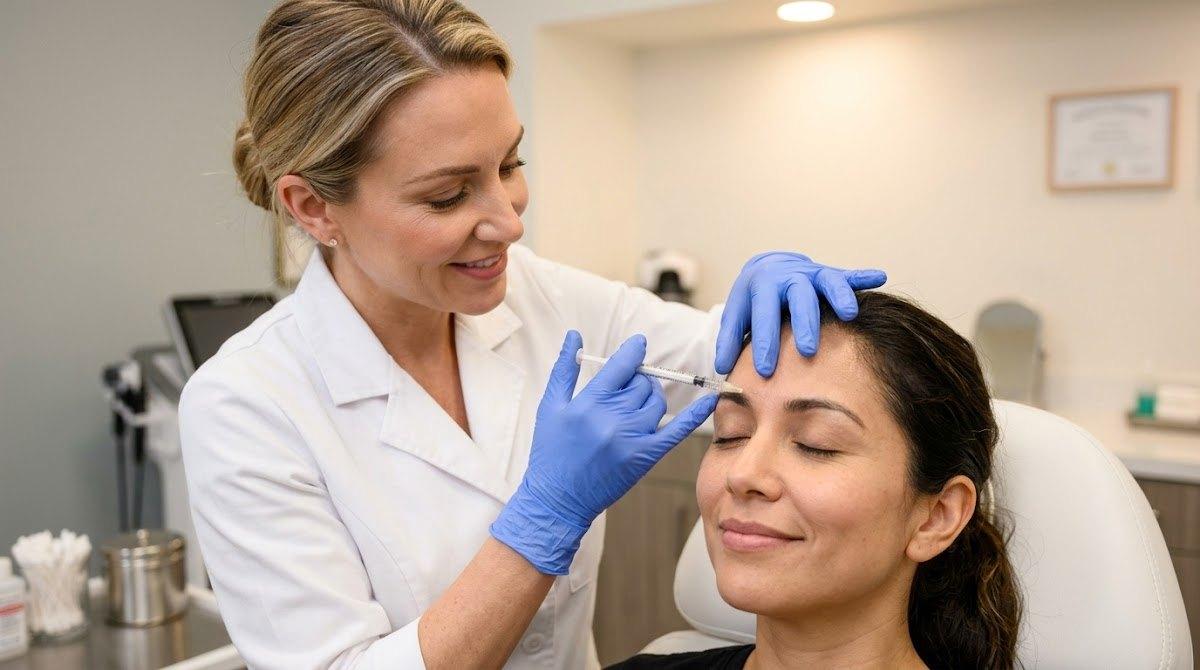
Most Botox injections feel like a quick pinch or a mosquito bite. The needle is tiny, the process is fast, and many patients are surprised by how easy the appointment feels.
Some providers use Comfortox 31g syringes to improve comfort during each injection. Topical numbing can also be used if needed. So no, Botox injections are not usually the painful ordeal people imagine.
Myth 3: Stopping Will Make Your Wrinkles Worse
This is one of the most common Botox myths, and it’s false.
If you stop Botox, your muscles simply regain their usual activity over time. Your skin returns to its pre-treatment baseline. It does not rebound and suddenly create worse wrinkle depth than before.
What many people notice is normal aging. Fine lines, static creases, and facial changes continue as the years pass. That would happen whether you had Botox or not.
Myth 4: These Treatments Are Highly Addictive
Botox contains no addictive substance. There is no chemical dependence, no withdrawal, and no reason you cannot stop whenever you choose.
So why do people keep coming back? Simple. They like the results. They enjoy looking smoother, more youthful, and more rested. That preference is not addiction. It’s personal aesthetics.
Myth 5: It Is Only Used for Cosmetic Wrinkles
This surprises many people.
Botox was first used for medical problems such as strabismus and eye spasms. Today, it is FDA-approved for several conditions beyond wrinkle care, which says a lot about its versatility.

Alternative uses can include:
- chronic migraines
- TMJ conditions
- excessive sweating
- neck and back pain
For people dealing with overactive sweat glands, hyperhidrosis care may also be part of the conversation.
Maximizing the Benefits of Botox: Achieving a Smooth Appearance
Once you get past the myth and the noise, the real question becomes simple: what can Botox actually do for you?
The answer depends on the area, your muscle strength, and your goals.
Understanding the Timeline and Maintenance
Botox is a popular cosmetic injectable used to soften dynamic wrinkles caused by repeated movement. It often treats the forehead, crow’s feet, and the lines between the brows.
The onset is not instant. Most people begin to notice changes in 4 to 7 days. Full results usually settle in after 7 to 10 days.
From there, results last about 3 to 4 months on average. If you exercise often or have a faster metabolism, you may process Botox a bit faster and need maintenance closer to three or four times per year.
That timeline matters. Botox temporarily relaxes muscle movement. It does not work like skincare, and it does not deliver permanent change after one visit.
The benefits of Botox are best seen when treatment is consistent and thoughtfully planned.

Differentiating Between a Wrinkle Relaxer and a Dermal Filler
People often mix these up, which makes debunking Botox even harder.
Botox relaxes muscles. A dermal filler does something different. Filler, often made with hyaluronic acid, restores volume and helps with deeper static folds that remain even when your face is at rest.
So if Botox is used to relax the muscles that create movement-based lines, filler is used to support areas that have lost structure. Both can play a role in facial rejuvenation, but they solve different problems.
That is why a full consultation matters. The best plan is not always more Botox. Sometimes the better answer is a mix of wrinkle relaxer, dermal filler , and smart skincare.
Quick Reference: Fact vs. Fiction Overview
Here’s the short version.
| Common Myth | The Clinical Reality |
|---|---|
| Causes a "Frozen Face" | Relaxes targeted muscles only; full natural facial expressions are preserved when done well. |
| Extremely Painful | Feels like a slight pinch; 31g syringes help improve comfort. |
| Worsens Wrinkles if Stopped | False; your face returns to baseline and continues normal aging. |
| Toxic to the Body | Uses a purified form with a 20+ year safety record; cosmetic amounts are very small. |
| Highly Addictive | No addictive ingredients; ongoing visits are optional. |
| Results Look Obvious/Fake | “Frozen” or plastic surgery results usually come from an inexperienced injector or poor dosing. |
Scheduling Your Professional Consultation in Denver
If you’re considering getting Botox injections, this is the part that matters most.
Your provider should understand anatomy, movement, and how to tailor treatment to your desired results. A careful consultation helps the injector assess where to inject, how much to use, and how to preserve natural facial expressions.
At Boujee Nurse in Denver, the focus is on subtle, aesthetic outcomes that help you look like yourself on your best day. Not stiff. Not overdone. Just refreshed.
Conclusion
Botox myths debunked, the takeaway is simple: Botox does not make you look frozen when it is used with skill and restraint. It relaxes muscles, softens lines, and can create a smoother, rested appearance.
The best results come from thoughtful planning, conservative dosing, and an experienced provider who knows how to keep your face natural.
Frequently Asked Questions About Botox Frozen Face Myth
Can Botox make you look frozen?
Only if too much is used or the treatment is poorly done.
Do Botox injections remove all movement?
No. Botox targets specific muscles, not your whole face.
Will I still have facial expression after Botox?
Yes. Good treatment keeps you looking natural and expressive.
Is Botox treatment painful?
Usually not. Most people feel only a quick pinch.
What if I stop Botox?
Your muscles return to normal activity, and your lines gradually come back.